
How to Teach Your Teen to Drive: The Plan Nobody Hands You
Every guide says start in a parking lot and log your hours. That advice is correct, and it's exactly where most families go wrong.
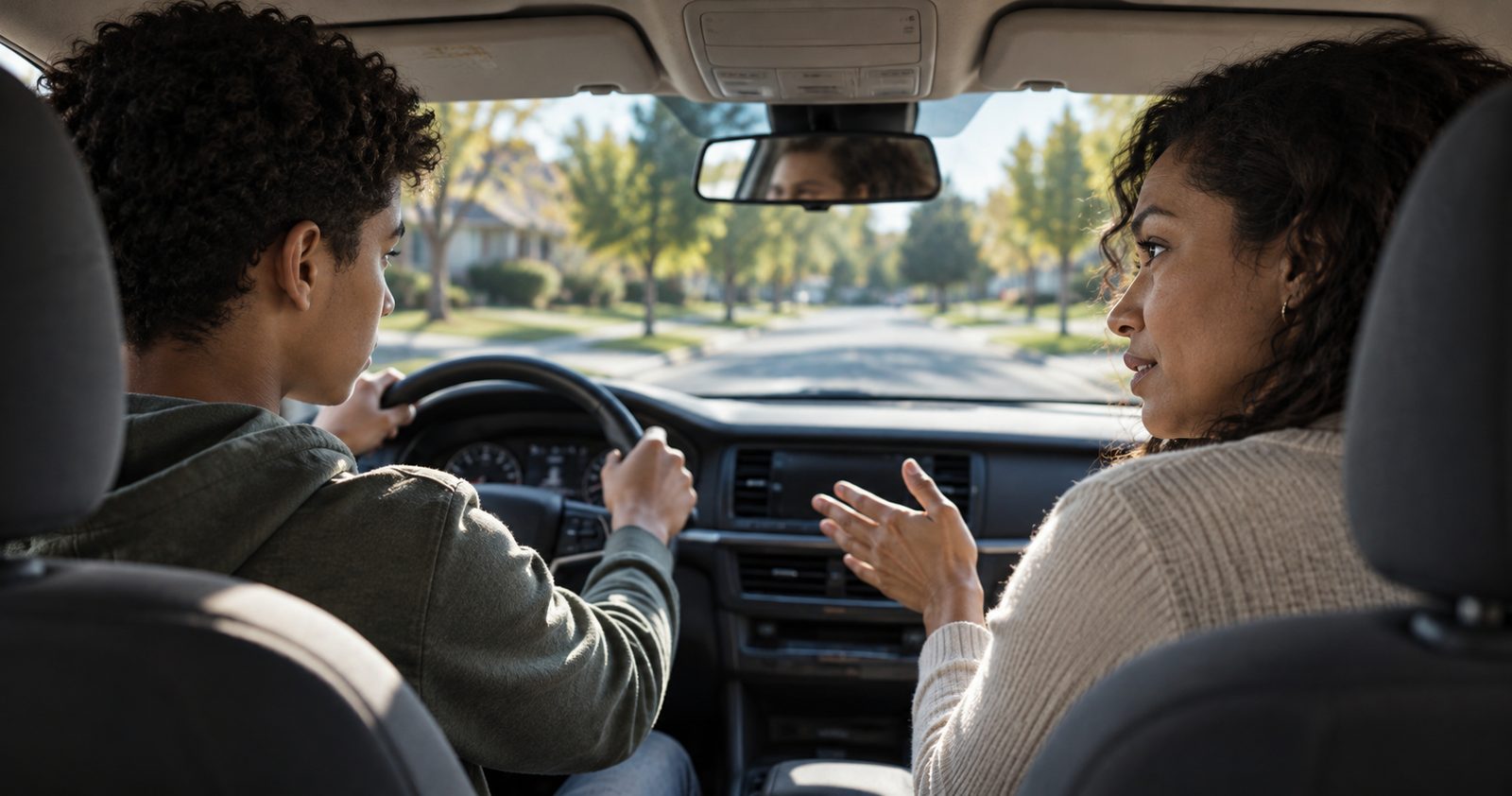
Teach in stages, in order: an empty lot, quiet streets, busy roads, highways, then night, rural roads and bad weather, and finally drives where your teen makes every decision. Aim for about 70 hours, but measure progress by the conditions they've handled, not the total. And don't stop at the license: the riskiest months come after it.
Search for how to teach a teen to drive and you’ll get the same advice everywhere. Start in an empty parking lot. Work up to busier roads. Log your fifty hours.
All of it is correct. I followed it with my oldest son. It’s also why I ended up building DRVN.
Here’s what it leaves out. The parking lot isn’t where families get stuck. Month five is. Practice settles into the same few errands, the hard stuff keeps getting postponed, and then the birthday appears and everyone scrambles to cram in highway, night and weather before the road test.
The standard advice is written for a parent with free Saturdays and a driving instructor’s patience. This plan is for the one with forty minutes on a Tuesday, a teenager who sighs at every suggestion, and a strong personal interest in never driving to practice again.
What the standard advice gets wrong
It counts hours. Hours measure time in the car, not what happened there. Years after my oldest, our log showed my younger son had 15 hours. My wife didn’t believe it. “It feels like fifty,” she said. It does feel like fifty. It doesn’t perform like fifty.
What works is range. In a randomized trial, families given a plan that pushed practice into more kinds of driving saw failure on an on-road safety test drop from 15% to 6%. They didn’t drive more. They drove in more places.
Source: CHOP TeenDrivingPlan randomized trial, JAMA Pediatrics, 2014 · Evidence Library
It assumes you have time. You don’t. Almost all practice happens on trips you were already taking, which is why so much of it happens on the same few miles of road. With my oldest, it was about eight. A plan has to run on errands, or it won’t run.
It ends at the road test. That’s the starting line for the dangerous part. New drivers rarely crash with a parent in the car, but have the highest crash rates of any age group in their first six months alone, according to NHTSA.
Source: NHTSA, Teen Driving
It assumes you’re neutral. You’re not. After sixteen years as the family transportation department, you want them driving. Badly. “Technically eligible” starts sounding a lot like “ready.”
Step 1: Learn the car in an empty lot
The first drive should be in a big, empty parking lot, and it should teach the car, not driving.
Seat, mirrors, pedals, lights, wipers. Then creeping forward without gas, stopping smoothly, slow loops, gentle turns and backing up straight. Twenty or thirty minutes is plenty. The First Drive walks through it.
The trap: letting them drive home from the licensing office. The first drive deserves its own place and its own plan.
Move on when: stopping and steering are smooth and neither of you is gripping anything. Usually two or three sessions.
Step 2: Quiet streets until the controls are automatic
Stay on low-traffic streets until operating the car stops taking all their attention.
Lane position, smooth braking, stop signs, turns, and looking farther ahead than the hood. Twenty minutes three times a week beats two hours on Sunday.
The trap: staying here for months because it’s comfortable for both of you.
Move on when: they can drive a familiar three-mile route while you say nothing, and that isn’t stressful for either of you.
Step 3: Busy roads, where judgment starts
Move to multi-lane commercial roads, where the real skill is reading other drivers.
Gaps, left turns across traffic, following distance, lane changes, and cars pulling out of parking lots without looking. Ask “what’s the risk here?” at random moments, and make them answer.
The trap: calling the gaps for them. “Go now” teaches a teenager to listen to you, not to judge traffic. Let them decide. You only veto.
Move on when: they choose safe gaps on their own and start pointing out hazards before you do.
Step 4: Highways, in order
Build highway driving in stages: a quiet rural on-ramp, then a suburban one, then trucks, then rush hour.
At least four sessions, spread over weeks. The on-ramp is for matching speed, not stopping and waiting.
The trap: putting it off until the month before the license. It’s how so many teenagers end up making their first real highway drive alone.
Move on when: merging, lane changes and exits feel routine with traffic around them.
Step 5: Night, rural roads and bad weather
These are the conditions families skip most, and where inexperience is most dangerous.
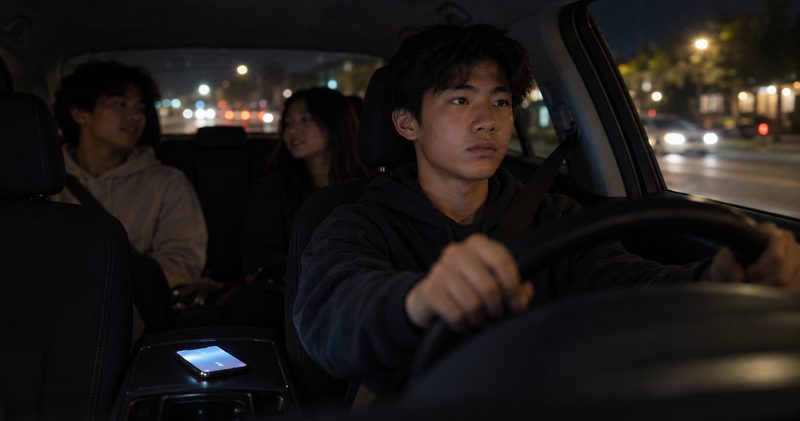
Night. Dusk on familiar roads, then unfamiliar ones, then rain after dark. More than a third of teen driving deaths happen between 9 p.m. and 3 a.m., according to IIHS. Iowa requires 2 night hours. That’s a couple of drives home from a basketball game. Do much more. Night Driving has a plan.
Source: IIHS, Teenagers
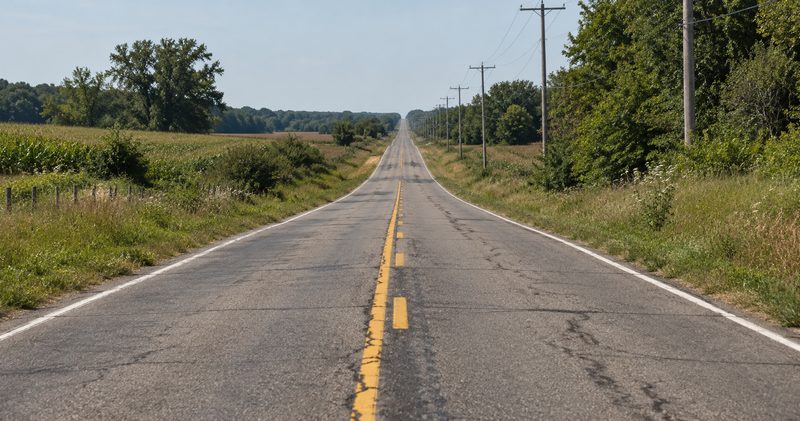
Rural roads. No shoulder, changing surfaces, hills that hide what’s coming. Nothing you need is out there, so plan a loop on purpose.
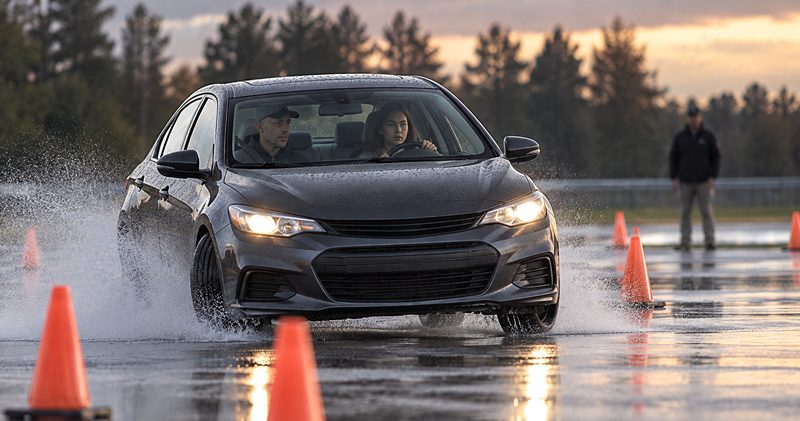
Bad weather. You can’t schedule it. Take it when it comes. Rain, Snow and Ice on Purpose covers how.
The trap: “not tonight.” It’s a reasonable call, made a dozen times, and the result is that their first hard rain happens without you.
Move on when: they’ve handled each condition more than once, not just survived it.
Step 6: Hand over the decisions
In the last few months, take yourself out of the driving while you’re still sitting there.
Let them navigate somewhere new with no help from you. Do whole drives where you say nothing unless it’s a safety issue, and talk afterward. Let them own the trip: the route, when to leave, where to park.
The trap: the passenger-seat narrator. If you’re still calling the turns, they haven’t learned to drive yet. They’ve learned to follow directions. Are You Still Driving From the Passenger Seat? is the honest check.
You’re close when: they drive forty-five minutes somewhere new, in traffic, and you didn’t speak and didn’t need to.
Step 7: Keep teaching after the license
The license changes your role. It doesn’t end it.
Hand over independence in stages: familiar daytime trips first, then night, then highways, then passengers. Keep riding along for the hard firsts, like the first snow or the first long trip somewhere new. The First Six Months Alone has the month-by-month version, and a parent-teen driving agreement puts the rules in writing before anyone has the keys.
The trap: treating the license as the finish line. In my house, it felt like the end of the project. It wasn’t.
How many hours of practice does a teen need?
About 70, which is what IIHS recommends and more than most states require. Ohio asked my family for 50. Iowa asks for 20. Check your state’s rules, then treat them as the floor.
Better than any total is a checklist: night on an unfamiliar road, rain, real highway traffic, a left turn across a busy road without you saying when, and a drive somewhere new without you navigating. If any are missing, the hours don’t mean much. The 50-Hour Myth explains why.
How do you know they’re ready to drive alone?
The state sets eligibility. You set readiness. Passing the road test proves they can handle a short drive with an examiner. It doesn’t prove they can handle the conditions they’ll actually face.
Look for smooth control, hazard awareness without prompting, good judgment on speed and gaps, real experience across conditions, and drives where you’ve stopped making the decisions. With my oldest, I let the road test decide. I wouldn’t again.
DRVN Readiness Framework Control · Awareness · Judgment · Coverage · Independence. See how DRVN evaluates readiness
How to make this work on a Tuesday
Spend twenty minutes once, with a piece of paper. Write six headings: residential streets, busy roads, highway, rural roads, night and bad weather. Under each, name two or three real places near you. The Six Environments explains each one.
Then, when it’s 5:40 and you have forty minutes before dark, you’re not deciding what to practice. You’re picking from a list you made when you had time to think.
That’s why I built DRVN, after doing all of this with a clipboard and a guess. It logs every drive and maps the route, so you can see what you’ve covered and what’s still missing. Use it, use the notebook, use whatever you’ll actually keep up with.
Your teenager is going to drive in all of these places eventually. The only question is whether you’re in the car the first time.
More on Practice
- Mirman JH, Curry AE, Winston FK, et al. Effect of the Teen Driving Plan on the Driving Performance of Teenagers Before Licensure: A Randomized Clinical Trial. JAMA Pediatrics, 2014. doi:10.1001/jamapediatrics.2014.252 · pubmed.ncbi.nlm.nih.gov
- TeenDrivingPlan Research. Children’s Hospital of Philadelphia, Center for Injury Research and Prevention, Checked October 2026 · injury.research.chop.edu
- Teenagers. Insurance Institute for Highway Safety (IIHS), 2024 data · iihs.org
- Teen Driving. National Highway Traffic Safety Administration (NHTSA), Checked October 2026 · nhtsa.gov
- Graduated Driver Licensing. Ohio Bureau of Motor Vehicles, Checked October 2026 · bmv.ohio.gov
- The Parent’s Supervised Driving Program (PDF). Iowa Department of Transportation, 2021 edition · iowadot.gov