
Left Turns: The Most Judgment-Heavy Thing Your Teen Will Do All Day
An unprotected left turn asks a new driver to judge speed, distance and gaps all at once. It's learnable, but only with a lot of reps.
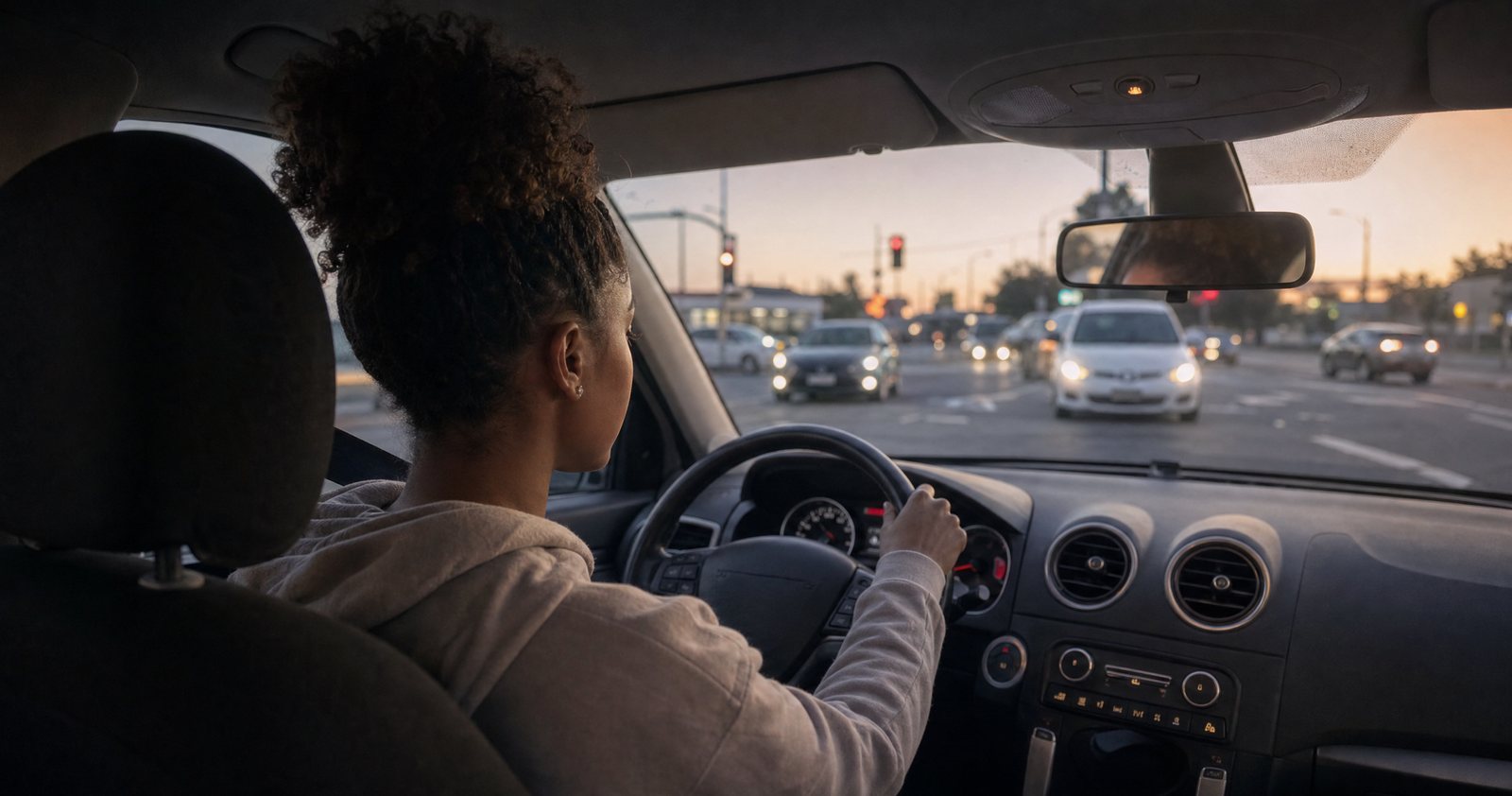
Ask a new driver which part of driving scares them most, and a lot of them say the same thing: turning left across traffic.
They’re right to. A left turn on a green light, with no arrow and a steady stream of oncoming cars, asks a beginner to do several hard things at once. Judge how fast those cars are coming. Judge how far away they are. Decide whether the gap is big enough. Check for pedestrians in the crosswalk they’re turning into. Then commit, smoothly, without hesitating halfway.
Experienced drivers do all of that in about a second, without noticing. A sixteen-year-old is doing it consciously, one piece at a time.
Why are left turns so dangerous for new drivers?
A left turn across traffic asks a new driver to judge the speed and distance of oncoming cars and pick a safe gap, which is one of the hardest calls in everyday driving. It also stacks up the errors that cause most serious teen crashes.
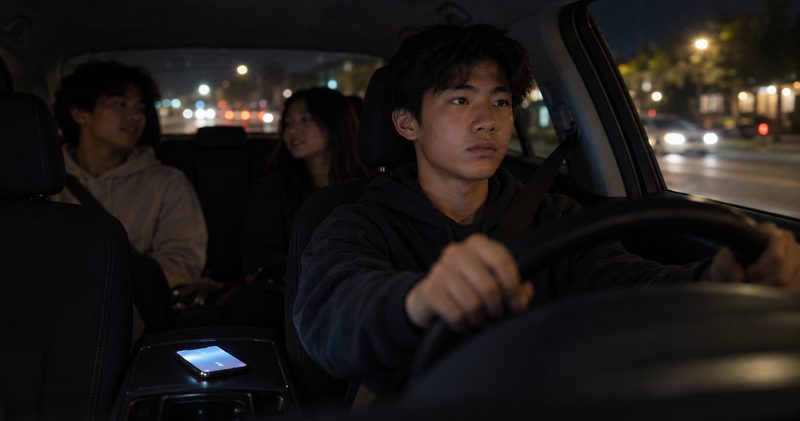
When researchers at Children’s Hospital of Philadelphia looked at serious crashes involving teen drivers, the three most common critical errors were not scanning enough to spot hazards (21%), going too fast for conditions (21%) and being distracted (20%). Recognition errors, failing to see or process what’s there, made up nearly half of all teen errors.
A left turn is a scanning test with a deadline. That’s why it deserves its own practice.
Rule one: wheels straight while you wait
This is the habit to install first, because it’s simple and it matters. While waiting to turn left, keep the wheels pointed straight ahead. If you’re hit from behind with the wheels already turned, the car gets pushed into oncoming traffic. Straight wheels push you forward instead.
Most new drivers turn the wheel early because it feels like getting ready. Catch it every time until they stop doing it.
Rule two: the gap they pick, not the one you pick
The real skill is gap judgment, and the only way to build it is for them to make the call. If you say “go” every time, you’re doing the judging and they’re just driving the car.
Try this sequence:
- Talk it through as a passenger first. While you drive, narrate: “That gap’s too small. That one’s fine. That truck is farther than it looks.” Then ask them to call the gaps while you drive.
- Quiet intersections, their call. Light traffic, a clear view. They decide when to go. You say nothing unless it’s unsafe.
- Ask afterward, not during. “How much room did you have on that one?” “Would you take that same gap at night?”
- Busier roads. Same thing, more traffic. It’s fine if they wait too long. Passing up a gap is never the dangerous mistake; taking a bad one is.
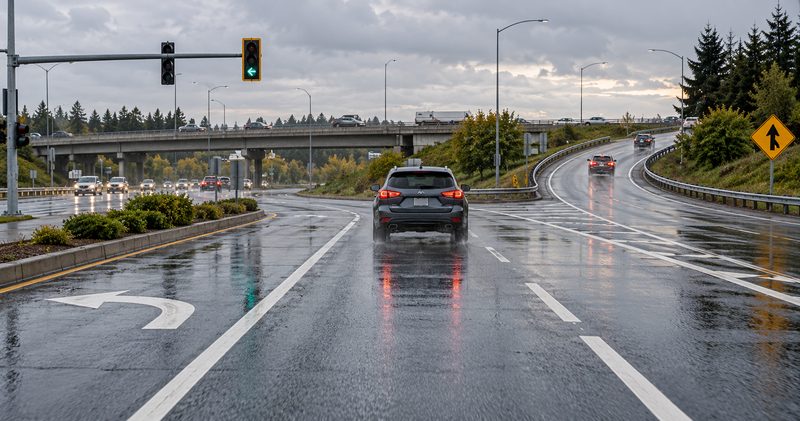
- Night and rain. Headlights make speed and distance much harder to judge. Practice these on purpose.
Passing up a gap is never the dangerous mistake. Taking a bad one is.
The other things to scan
The oncoming car gets all the attention. These get missed:
- The crosswalk you’re turning into. Pedestrians step out exactly when a new driver is watching traffic instead.
- The car hidden behind the oncoming car. Especially a motorcycle.
- The oncoming car that’s also turning left. It can block the view of a car coming straight through.
- The light. If it turns yellow while they’re waiting in the intersection, they finish the turn when it’s safe. Practice what that feels like before it happens.
When to use the arrow, or skip the turn
Sometimes the smartest left turn is three right turns. On a busy road with no signal, it’s completely reasonable to tell a new driver: go right, then turn around somewhere safe. It’s a habit plenty of experienced drivers use too.
This week
On your next drive, let them pick every gap on every left turn. Say nothing unless it’s unsafe. Afterward, ask which one felt closest. Their answer will tell you exactly what to practice next.
More on Practice
- Prevalence of teen driver errors leading to serious motor vehicle crashes (Curry, Hafetz, Kallan, Winston & Durbin, 2011). Accident Analysis & Prevention / CHOP, 2011 (NMVCCS crash investigations) · doi.org
- New study pinpoints what happens right before teens crash. Children’s Hospital of Philadelphia (via Newswise), April 2011 · newswise.com
- Driver’s Manual, Chapter 5: Intersections and Turns. New York DMV, Checked October 2026 · dmv.ny.gov
- California Driver Handbook: Navigating the Roads. California DMV, Checked October 2026 · dmv.ca.gov