
Night Driving: The Practice Most Families Get Two Hours Of
Practice it on purpose before the license. Limit it on purpose after. Most families do neither.
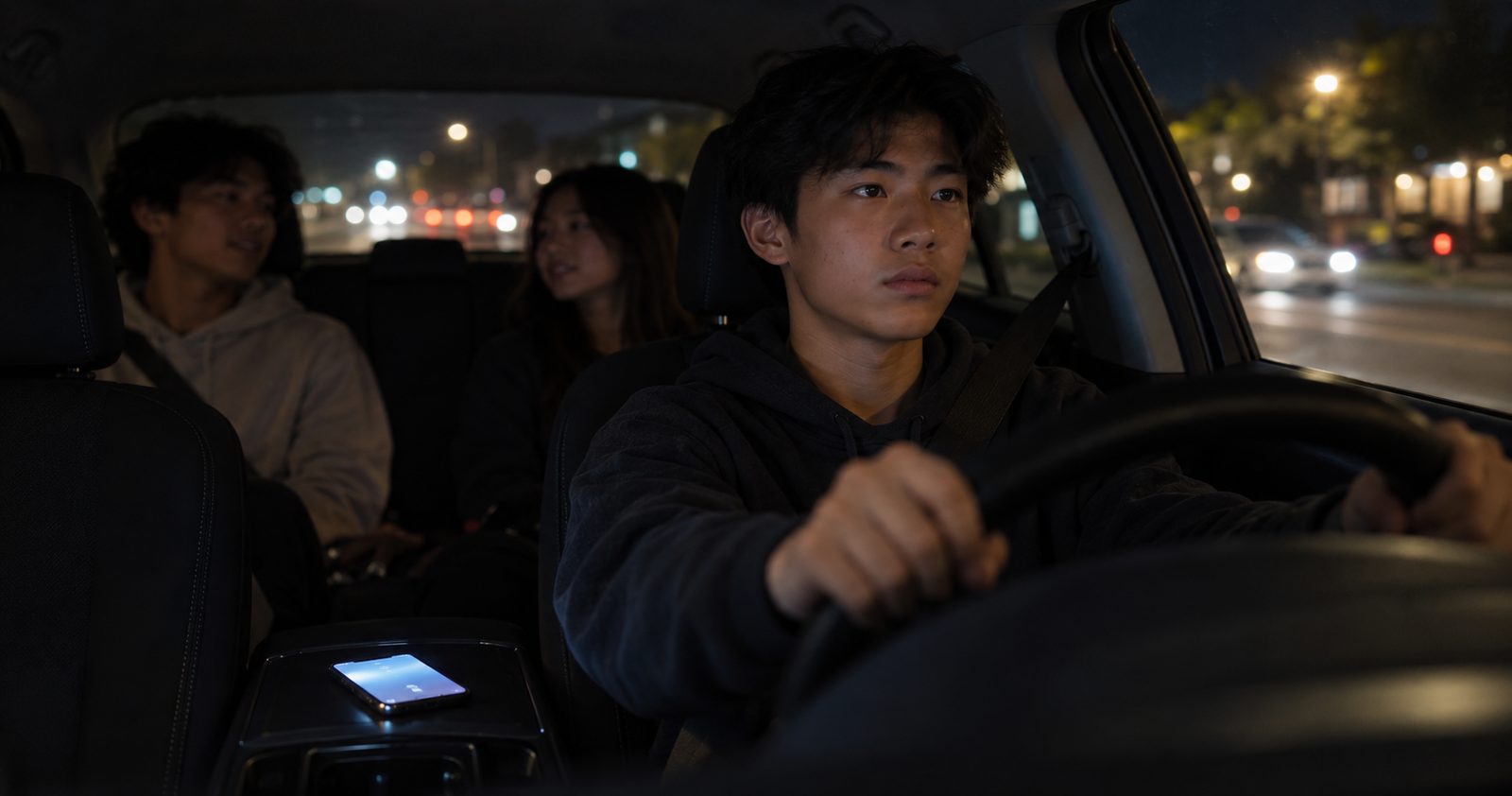
Here is how night practice usually happens. It’s November. Practice is at 5:30. By 5:30 in November it’s dark. So you count it.
That’s not a plan. That’s the calendar doing your planning for you, and it does a pretty mediocre job. It gives you the same twelve minutes of dark road, on the same route, in the same direction, a few dozen times. Then spring arrives, the clocks change, and night practice ends on its own.
Then your kid gets a license, and the drives that actually happen at night are the ones you didn’t practice: home from a friend’s house on a road they’ve never driven in the dark, after a game, after a closing shift, tired, with somebody in the passenger seat.
The hours on the form are tiny
My kids learned to drive in Ohio, which asks for 10 of the 50 supervised hours to be at night. Iowa, where I live now, asks for two. Two hours. That’s a couple of trips home from the grocery store with the headlights on.
Compare that to where the risk actually is. More than half of teen driving deaths happen between 6 p.m. and 3 a.m., and about a third between 9 p.m. and 3 a.m. Per mile driven, the nighttime fatal crash rate for teen drivers is about three times that of adults in their 30s to 50s.
Source: IIHS, Teenagers · CDC, Risk Factors for Teen Drivers · Evidence Library
So the state asks for a sliver of practice in the conditions that produce a big share of the deaths. That’s not a safety standard. It’s an afterthought with a number on it.
Night isn’t one more condition. It makes every other condition harder.
Why is night driving harder for new drivers?
At night you see less, and you see it later. Everything a new driver has been using to judge distance and speed — the edge of the road, the shape of the car ahead, the curve coming up — gets thinner. Oncoming headlights take a few seconds of vision away every time they pass. Pedestrians and deer show up at the last second, if at all.
Add the fact that night is when teenagers are tired, and when the social driving happens. A lot of what makes night dangerous isn’t darkness by itself. It’s darkness stacked on top of fatigue, friends and inexperience, all at once.
How should teens practice night driving?
You don’t need more nights. You need a sequence. Here’s the one I’d use.
Start at dusk on a road they know. The light fades while they drive, so the change happens gradually, on a route where they already know every turn.
Then full dark, same road. Same route, no daylight. Talk about what changed: what they can’t see now, what they’re using instead.
Then a road they’ve never driven in the dark. This is the step most families skip, and it’s the one that matters. Unfamiliar plus dark is the drive they’ll actually face.
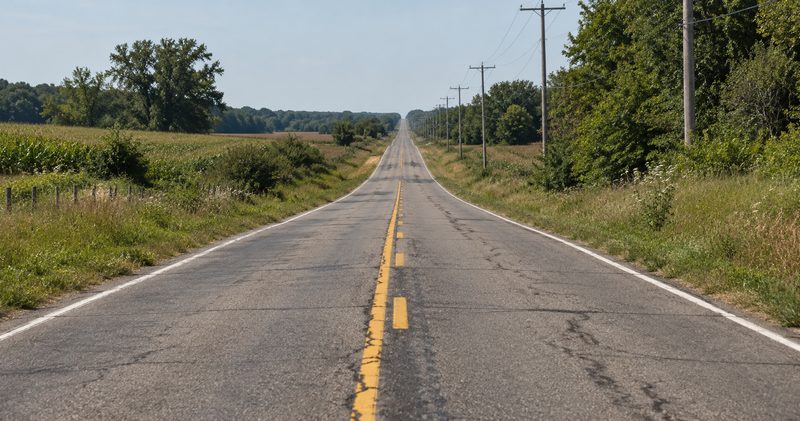
Then a rural road without streetlights. High beams on and off. The edge line as a guide. Speed chosen for how far they can see, not for the sign.
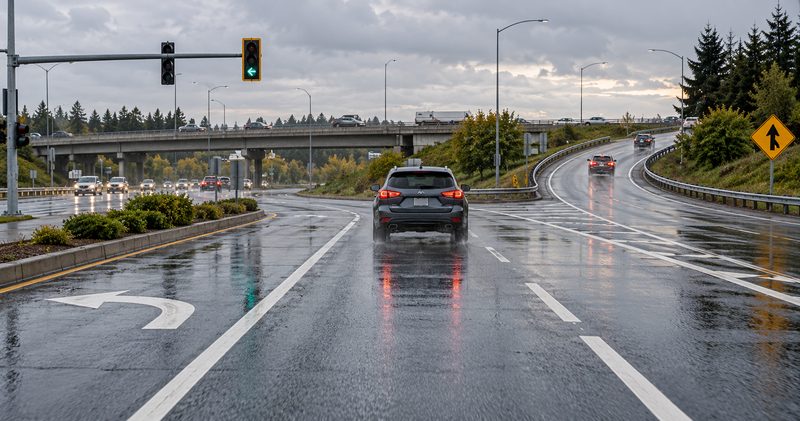
Then rain at night. It’s its own skill. More on that in Rain, Snow and Ice on Purpose.
Then the real drive. Practice the exact trips they’ll make alone after dark: home from the school, the friend’s house, the job. Same time of night, same route.
One habit to coach on every night drive: eyes up and out, not glued to the patch of road in the headlights. Look at the right edge when oncoming lights are bright. Expect what you can’t see yet.
Should new drivers have a night driving limit?
After the license, the CDC suggests keeping newly licensed teens off the road by 9 or 10 p.m. for at least the first six months. Your state’s own curfew may be later. Before you allow solo night driving, see how to evaluate readiness after dark: the same five signs apply, they just get harder to show at night. Check what yours says, then decide whether you want a stricter family rule.
That rule isn’t a punishment, and it’s worth saying so out loud. It’s a way to limit time in the riskiest hours while experience catches up. Make it about a date, not a mood: “No solo driving after 10 until spring, and then we’ll look at it again.” Teenagers can live with a rule that has an end date. Parents can enforce one.
This week
Pick one night drive and make it unfamiliar. A road they’ve never driven after dark, twenty minutes, no music, you quiet. Afterward, ask one question: “What was harder than you expected?”
Whatever they say, that’s next week’s drive.
More on Practice
- Teenagers. Insurance Institute for Highway Safety (IIHS), 2024 data · iihs.org
- Risk Factors for Teen Drivers. Centers for Disease Control and Prevention (CDC), Reviewed August 2025 · cdc.gov
- Eight Danger Zones. CDC, Parents Are the Key, Checked October 2026 · cdc.gov
- Graduated licensing laws (state-by-state table). IIHS, Checked October 2026 · iihs.org
- Graduated Driver Licensing. Ohio Bureau of Motor Vehicles, Checked October 2026 · bmv.ohio.gov
- The Parent’s Supervised Driving Program (PDF). Iowa Department of Transportation, 2021 edition · iowadot.gov
The research behind this page, with caveats, is in the DRVN evidence library: More than half of teen driving deaths happen between 6 p · CDC recommends no teen passengers and no driving after 9 or 10 p. Sources checked October 2026.