
Rain, Snow and Ice on Purpose
Almost every state counts your teenager's night hours. Two count rain.
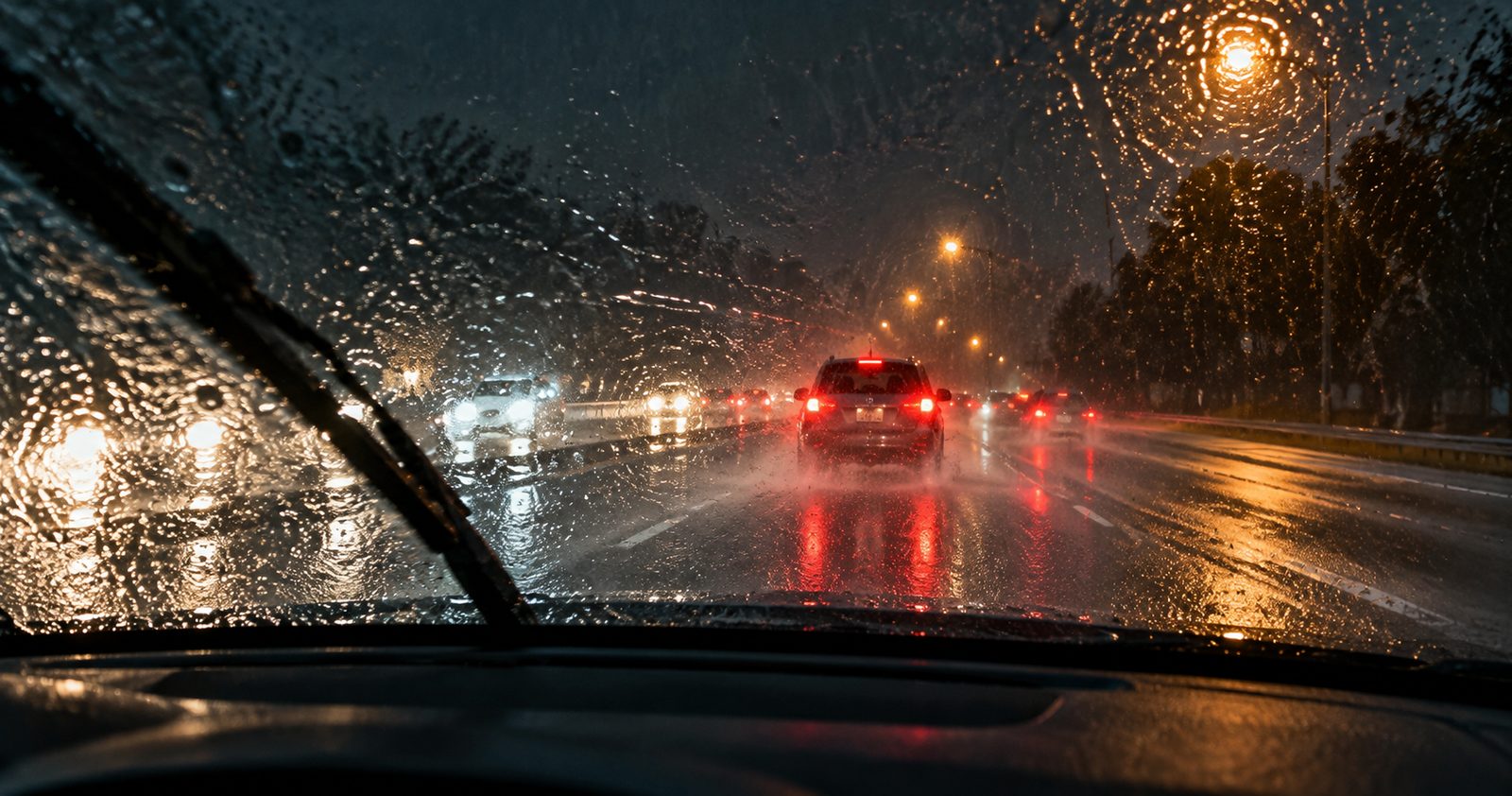
My four kids learned to drive in Ohio, which is not a dry place. All four cleared fifty hours of supervised practice, which is more than the state asked for, and between them that adds up to a lot of time in a car with me in the passenger seat.
Almost none of it was wet.
I didn’t notice that at the time. I noticed it years later, thinking about something else, and it arrived the way those things do — not as a mistake I could remember making, but as a fact that had apparently been true the whole way through without ever once coming up.
We just didn’t do it
The forecast says rain. You look out the window. You think: we’ll go tomorrow.
We didn’t go tomorrow. We went the next dry day, which was usually Thursday, and by Thursday there was nothing left to notice.
That’s the whole story. Four kids, a full permit year each, and I couldn’t tell you one reason we never drove in weather except that it was raining and we didn’t go.
Nobody was ever going to tell me
Here’s the part I only learned recently.
Almost every state in the country tells you how many of your teenager’s supervised hours have to happen after dark. Usually ten. Colorado wants ten, California wants ten, Iowa wants two.
Two states say anything at all about weather. Pennsylvania asks for five hours, South Dakota asks for ten. Alaska sort of counts, except it lets night driving satisfy the same requirement, so in practice it doesn’t.
Everywhere else, the number of hours a new driver has to spend in rain before driving alone in it is zero.
I don’t think anybody chose that. Darkness is easy to legislate — it shows up on a schedule and you can write a number down. Weather won’t cooperate, so it fell out of the requirement, and then it fell out of everybody’s practice, because what gets required is what gets tracked and what gets tracked is what gets done.
Which means the thing I’d been quietly filing as my own sloppiness was mostly a missing instrument. There’s a line on the form for night hours. There’s no line anywhere for wet ones. So nothing ever told me in March that we’d logged forty hours and every one of them was dry. I spent a long time thinking I was disorganized. I wasn’t especially disorganized. I just had no idea what we’d actually done.
Snow gets the headline. Rain does the damage.
When people hear weather practice they picture snow. A parking lot, a teenager, some orange cones. It’s the dramatic version and it’s what leads the news every January.
But by the Federal Highway Administration’s numbers, about three quarters of weather-related crashes happen on wet pavement, and roughly half happen while it is actively raining.
Snow is regional and seasonal. Rain is everywhere, most of the year, including every state where nobody owns an ice scraper. If you’re only going to practice one of them, it isn’t snow.
What you’re setting up if you leave it
Run it on your own house and it gets uncomfortable quickly.
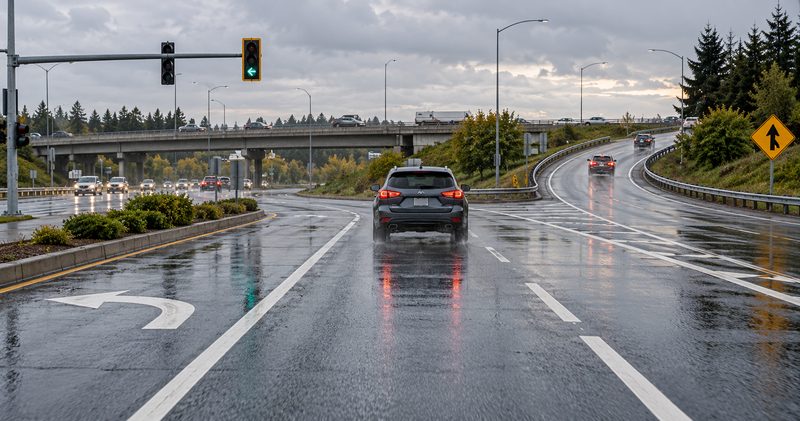
Say your kid is licensed in May. The first four months alone are a dry summer. Then it’s late September, nine at night, coming home from something, and it starts to rain hard.
That’s the first time they have ever driven in rain without an adult in the car. It’s also the first time they’ve driven in rain at night, which is the hardest thing most drivers ever do — the lane markings disappear, oncoming headlights scatter across a wet windshield, and everything they’ve been using to judge distance stops working at the same moment.
They’ll handle it or they won’t. But none of it should be new, and for most families all of it is.
Four things, and the first one is most of it
- Stop canceling. That’s the bulk of it and it costs nothing. You don’t need to add weather sessions to the calendar. You need to stop deleting the ones the weather already picked. It rains on a Tuesday you were driving anyway: go.
- Make the first one small. Short, a road they know, daylight, not the highway. You’re not testing them, you’re taking the novelty out. Twenty minutes of wet suburban street will do it. Say one thing before you pull out — same road, less grip, everything happens earlier — and then be quiet.
- Go skid on purpose. Next time there’s snow or ice, find an empty lot and let them get the car sideways at ten miles an hour. Have them brake hard. Have them turn too fast. Let the tires let go somewhere the only casualty is their dignity.
- Treat rain at night as its own thing. Not rain plus night. Its own category, practiced on purpose, on roads they know, before it happens to them by accident.
I’d put that third one up against any other twenty minutes in the permit year. Almost nobody does it, because it feels reckless and it is the opposite of reckless. The instinct in a skid — stare at the thing you’re about to hit, yank the wheel, stand on the brake — is wrong in every particular, and you cannot argue anybody out of an instinct. You can only let them have it once, cheaply, before it costs something.
One thing worth telling them
A road is at its most slippery when rain first falls after a dry stretch, when the oil and grease that have been collecting on it come up all at once and mix with the water. Oregon’s transportation department puts it plainly: the first hours of rain after a dry spell are when the trouble is.
Worth saying out loud, partly because it’s true and partly because it’s the kind of fact that gets a seventeen-year-old briefly interested in the road as a surface rather than as a thing that’s simply there.
It also means the most treacherous stretch of a rainy day is the exact moment you are most likely to look outside and say we’ll go tomorrow.
The part that isn’t up to you
Your kid is going to drive in hard rain. You don’t get a say in that. It will happen within a few months of the license, probably at night, probably on the way home from something, and almost certainly without warning.
The only thing you get to decide is whether you’re sitting next to them the first time.
More on Practice
- Graduated licensing laws (state-by-state table). IIHS, Checked October 2026 · iihs.org
- Young Driver. Pennsylvania Department of Transportation, Checked October 2026 · pa.gov
- Teen Drivers. South Dakota Department of Public Safety, Checked October 2026 · dps.sd.gov
- Rain and Flooding. Federal Highway Administration (FHWA), Road Weather Management Program, Page updated September 2024 · ops.fhwa.dot.gov
- First rains after dry spell can mean slick roads. Oregon Department of Transportation, September 2022 · content.govdelivery.com
The research behind this page, with caveats, is in the DRVN evidence library: Only three states require any supervised practice in bad weather, and one of them lets night driving count instead · Most weather-related crashes happen on wet pavement, not in snow or ice. Sources checked October 2026.