
Skip to content
About DRVN

The hard part isn’t getting them licensed. It’s getting them ready.

When it was my turn to teach, I found plenty of information and almost nothing that helped in the car, in the moment it mattered. So I built DRVN.

Robert Abbott·DRVN founder·Father of 4·Communication designer, entrepreneur
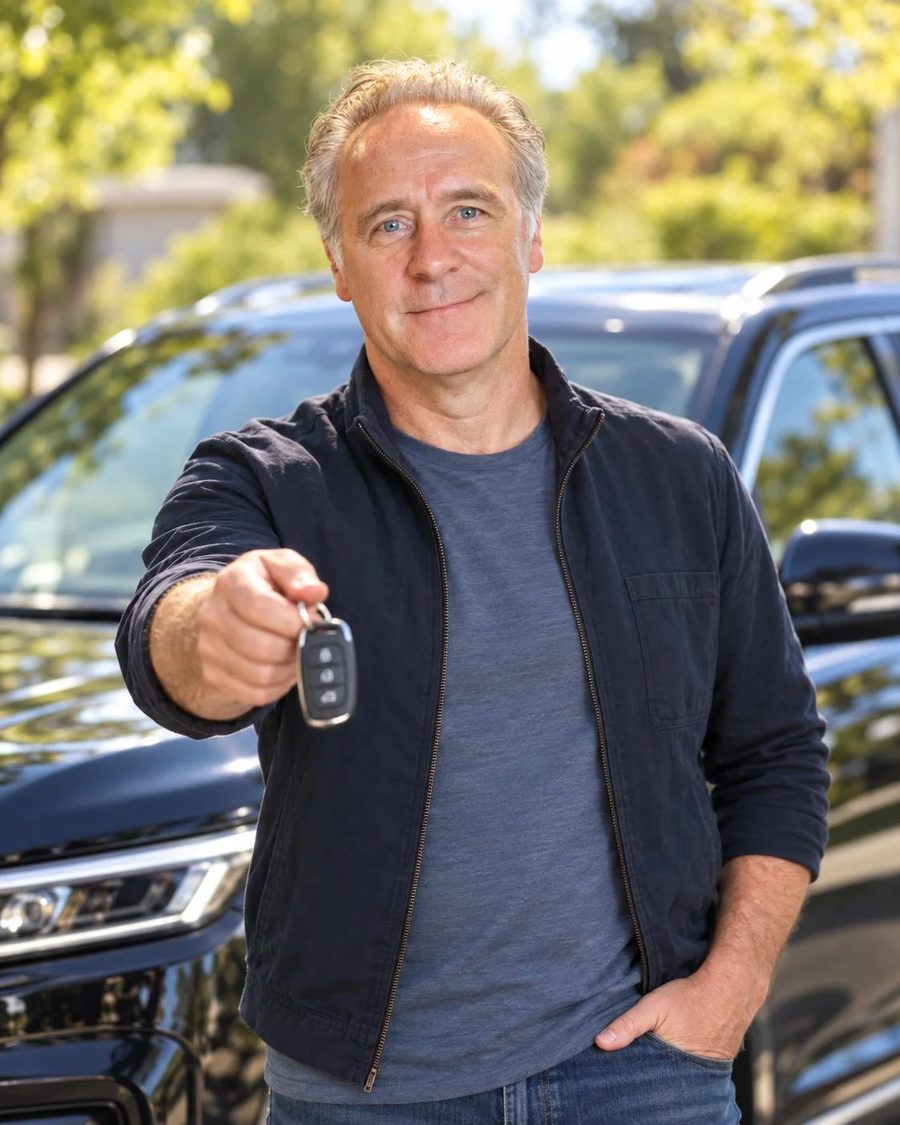
Robert Abbott holding out a set of car keys in front of an SUV

In 2015, I started teaching my oldest son to drive. I knew the stakes. Crashes are one of the biggest risks teenagers face, and the jump from permit to driving alone is a big part of why. Knowing that didn’t make the teaching any easier. I got in the passenger seat without a plan, which I suspect is how most of us do it.

There was no shortage of information. The state had its requirements. Driver’s ed covered the fundamentals. Insurance companies made it very clear this was going to be expensive. What nobody offered was the practical part: a plan for what to actually do once we were in the car.

Around the same time, I’d started riding motorcycles again. On a bike, you learn quickly that knowing the rules isn’t the same as being safe. Safe is seeing trouble early, guessing what the other driver is about to do, and making good decisions before they turn into emergencies, all of it practiced enough times that it becomes automatic.

Those are learned skills. Nobody was helping parents teach them.

I’ve spent my career in digital strategy and experience design, building tools that make complicated things easier for people to use. So I looked at it the way I’d look at any design problem:

The question behind DRVN
If we know experience makes new drivers safer, how do we help ordinary parents give their kids that experience on purpose, consistently, in a normal busy week?
DRVN is my answer.

What’s happened since

2016
DRVN launched
1,500+
young drivers trained with DRVN
Ohio Statehouse
testimony on young-driver safety

Since then, DRVN has been part of training more than 1,500 young drivers, and it keeps getting better through real use and through conversations with people who see teen driving from every side: driving instructors, traffic-safety researchers, state officials, insurance professionals, legislators, and a lot of parents and teenagers.

I’ve testified at Ohio Statehouse hearings on young-driver safety and presented DRVN’s approach at safety conferences. Driving instructors have been especially important along the way. Their role is essential, but their time with a student is short. Parents provide most of the practice. DRVN helps make that time count.

Early surveys of DRVN families showed encouraging signs, including lower crash and violation rates. Those surveys were observational, not a controlled study, so we don’t present them as proof. They did back up what parents and instructors were already telling us: structure changes how families practice.

Why there are articles here, too

It became clear pretty quickly that parents need help before the first drive. What are the real risks? What does my state’s requirement actually tell me, and what doesn’t it? Which skills matter? How much practice is enough? How will I know when they’re ready?

That’s why DRVN publishes guides and articles alongside the app. They do the same job: help you turn the permit year into preparation for the real world, not preparation for a test. Start with the parent’s guide →

What DRVN isn’t

It isn’t
A replacement for driver’s ed.
A replacement for your state’s requirements.
One formula that fits every new driver.
It is
A practical plan for the part of learning to drive that happens between lessons, over months, in your own car.

Sooner or later, every new driver meets heavy traffic, a hard merge, a dark country road, an impatient driver, a split-second decision or something they’ve never seen before. The question is whether they’ve met enough of it while you’re still in the passenger seat.

The state sets eligibility.
You set readiness.
That’s where DRVN starts. — Robert Abbott
Editorial standards

Practical advice still needs real evidence.

Parents don’t need more information. They need to know what it means when they’re sitting next to a new driver. That asks two things of us at once: take the evidence seriously, and make it useful.

The law
tells you what’s required.
We label it a requirement.
Research
tells you what lowers risk.
We label it a recommendation.
You
decide what your teen needs.
When we weigh in, we call it our point of view.

Read our editorial standards →See the research behind this guidance →

Robert Abbott, founder of DRVN
Robert Abbott
Founder, DRVN
Communication designer · father of four
Usability research, Apple Advanced Technology Group
Ohio Statehouse testimony, young-driver safety
The founder

Robert Abbott is a communication designer, entrepreneur and father of four who has spent the last decade on a deceptively hard problem: helping parents teach their teenagers to drive.

It started at home. In 2015 he began teaching his oldest son to drive and found that the help available to parents didn’t match the job. There was plenty of information: state requirements, safety statistics, driver’s ed, log sheets and warnings. What was missing was a practical way to turn months of supervised driving into real experience.

Riding motorcycles again around the same time sharpened the point. On a bike, reading the road and anticipating other drivers isn’t optional. Those are learned skills, and new drivers need more of the right experiences, in the right order, while someone is still beside them.

Robert came at it as a design problem. Early in his career he did usability research in Apple’s Advanced Technology Group, and he has since built a career designing digital experiences and engagement strategies for organizations around the world. Instead of treating teen driving as an information problem, he treated it as an experience problem. How do you make progress visible? How do you help parents know what to practice next? How do you get a teen onto different kinds of roads instead of the same familiar ones? How do you turn safety research into something a family can use on a Tuesday night after dinner?

Those questions became DRVN. It launched in 2016 and has since been part of training more than 1,500 young drivers. Robert has testified at Ohio Statehouse hearings on young-driver safety and presented at safety conferences, and he counts driving instructors among DRVN’s most valuable collaborators.

He’s quick to say he isn’t a traffic-safety researcher. He’s a parent and a designer who became convinced that families were being handed one of the riskiest transitions of adolescence without a usable plan. DRVN relies on researchers, safety organizations, instructors and government agencies for the evidence. His job has been connecting it to the family car.

The goal hasn’t changed since he first sat in the passenger seat: not just getting a teenager a license, but helping them become the driver you want them to be once you’re not in the car anymore.

The DRVN app
The plan, in the car with you.
One priority before each drive. Hours logged while you drive. A clear view of what you haven’t covered yet. Free for parents and teens.
Start your planGoogle Play →