
The Six Environments Every Teen Needs Before They Drive Alone
A thirty-second test, and the two your family is almost certainly skipping.
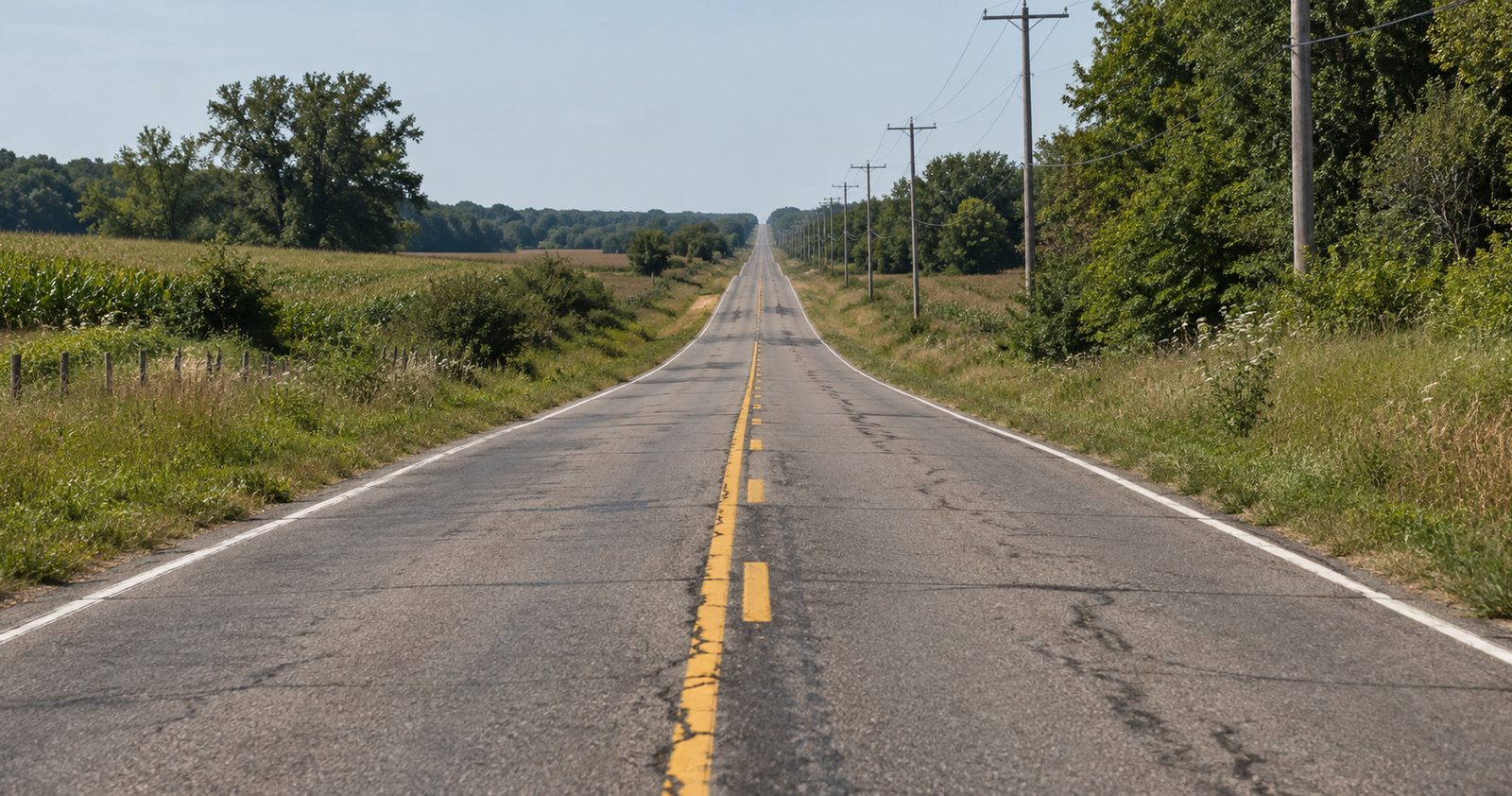
Before driving alone, a teen should have real practice in six environments: residential streets, commercial roads, highways, rural roads, night and bad weather. Variety builds judgment that repeating the same few routes never will.
Here is a test. It takes about thirty seconds.
Think back over the last month of practice driving with your teenager, and count how many of these they have actually driven in.
- Residential streets.
- Busy commercial arterials — four or five lanes, left turns across traffic, cars pulling out of parking lots.
- Rural two-lane roads.
- Limited-access highway, in real traffic.
- Darkness.
- Hard rain, or snow, or ice.
Most parents, counting honestly, come up with two. Sometimes three.
That number is the finding underneath all the research on practice driving. In a randomized trial, families given a plan that pushed their teen’s practice into more kinds of driving, including night and bad weather, saw the rate of teens failing an on-road safety evaluation drop from 15% to 6%. Those families weren’t driving more. They were driving in more places.
Source: CHOP TeenDrivingPlan randomized trial, JAMA Pediatrics, 2014 · Evidence Library, including the study’s limits
Why do most teens practice in only two environments?
Because most practice happens on trips the family was already taking, which means the same few roads over and over. It isn’t negligence. It’s arithmetic.
Practice happens during errands, because errands are the only time a working parent reliably has. And an errand is by definition a trip you were already taking — to school, to practice, to the store, to the same handful of places you have been driving to for years.
So the practice route list assembles itself out of your household logistics. And your household logistics were not designed to produce a well-rounded driver.
There’s a second thing working against you, and it’s the same trick that makes hours feel larger than they are: range feels like it accumulates when it doesn’t. You have spent a great many hours in the passenger seat, so it feels as though you must have covered a lot of ground. You’ve covered the same ground, many times.
What does each driving environment teach?
Residential streets. Vehicle control at low stakes: steering, braking smoothly, holding lane position, and looking further ahead than the hood. Everybody starts here and nobody skips it. The real risk is staying too long, because it’s comfortable for both of you.
Busy commercial arterials. Gap judgment, unprotected left turns, and other drivers doing unpredictable things at driveway speed. This is where a large share of novice crashes actually happen, and it is the environment that rewards deliberate practice the most.
Rural two-lane roads. The environment with the least margin engineered into it. Higher speeds on roads built for less: no shoulder to recover on, no lighting, no median, and fixed objects sitting a few feet off the pavement. The defining quality is variability. The surface changes without warning, the geometry hides what’s coming, and what you find around a bend might be something slow, something stopped, or something crossing. Long empty stretches invite speed and let attention drift, and then a hazard arrives with no time and usually no second option — no lane to move into, no shoulder to use. It teaches a driver to read the road ahead rather than react to it, to choose a speed from the geometry instead of the sign, and to recover from dropping a wheel off the pavement edge without snatching the car back.
Limited-access highway. Merging, speed matching, sustained attention at seventy, and changing lanes with a truck sitting in the blind spot. Parents postpone this one the longest, which is precisely why so many teenagers make their first real highway drive alone.
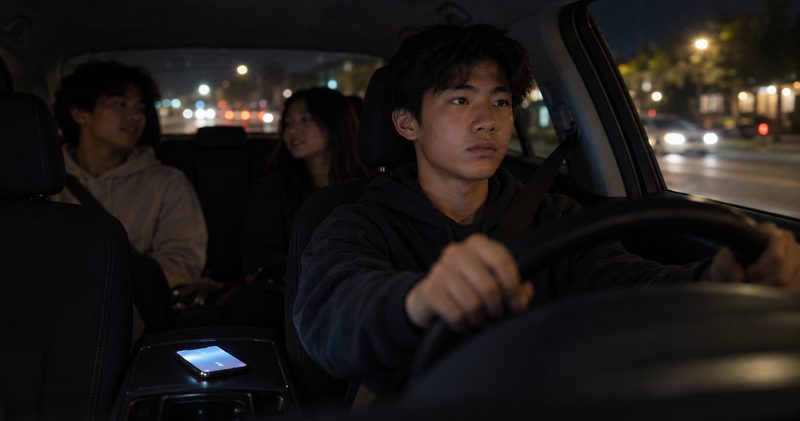
Darkness. Everything above, with a fraction of the information. Distance judgment degrades, hazard detection range shrinks, and the drivers on the road at eleven at night are a different population than the ones at three in the afternoon.
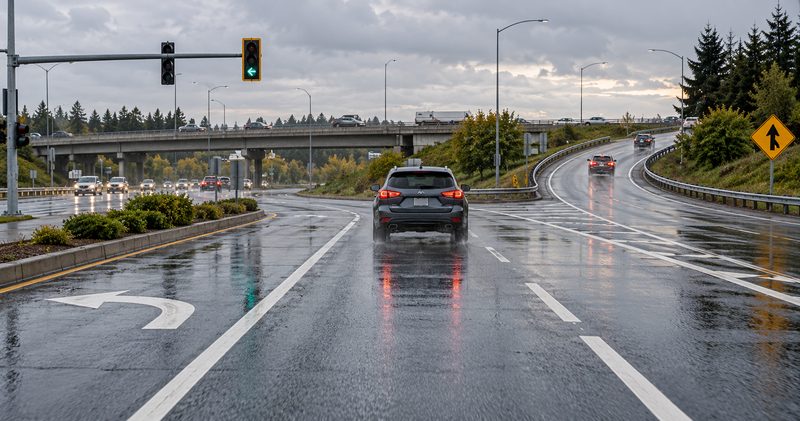
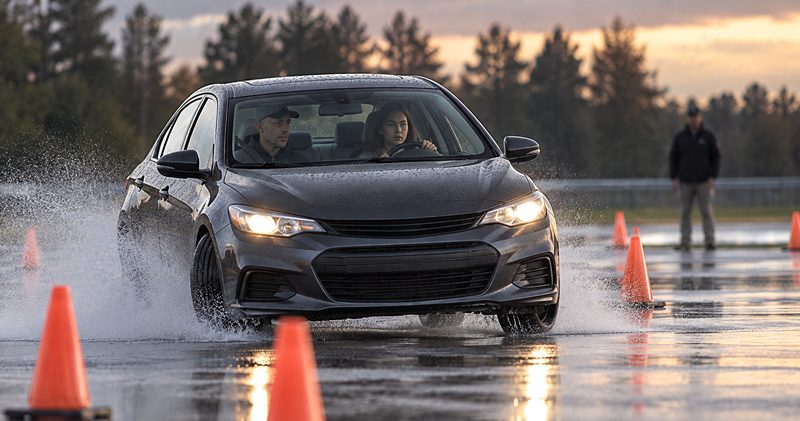
Bad weather. Braking distance, traction, what the car does when it starts to slide, and what stability control feels like when it engages. That last one matters: an unprepared teenager feels the pedal shudder and lifts off the brake at exactly the wrong moment.
The two everybody skips
Rural roads and bad weather.
Rural roads get skipped because there is usually no reason to drive one. Nothing you need is out there. Which means the only way it happens is on purpose — a forty-minute loop on a Sunday that accomplishes nothing except the thing it accomplishes.
It’s worth knowing what you’re skipping. Nationally, 41% of traffic deaths happen on rural roads, which carry 31% of the miles driven. Per mile, the rural fatality rate runs about half again the urban one. This is not a regional concern for people who live near cornfields — it’s the road type that punishes inexperience hardest, and almost every teenager ends up on one eventually.
Source: IIHS, Fatality Facts 2024: Urban/rural comparison
Bad weather gets skipped because it is genuinely unappealing. The first hard rain of the fall arrives, it’s dark, everyone is tired, and you think: not tonight. That’s a completely reasonable decision, made a dozen times, and the result is that their first hard rain happens without you in the car.
Bad-weather practice isn’t a lesson you add. It’s a lesson you stop canceling.
Night is the one states try to measure, and they get it wrong
Of the six, darkness is the only environment any state bothers to quantify.
Ohio requires ten of its fifty supervised hours to be at night. Iowa requires two of its twenty.
Two hours. That is a couple of drives home from a basketball game.
Meanwhile, 35% of teen driving fatalities happen between 9 p.m. and 3 a.m., and more than half fall between 6 p.m. and 3 a.m. A disproportionate share of the risk lives after dark, and in a lot of states the requirement covering it is a rounding error.
If you take one number out of this article: whatever your state asks for at night, multiply it.
How to build your own list in twenty minutes
You don’t need a curriculum for this. You need a piece of paper and everything you already know about your own town.
Write the six headings down. Under each one, name two or three specific places you could actually drive. Not categories — places. “The four-lane past the mall.” “The county road out past the grain elevator.” “The on-ramp at exit 12, and then the one at exit 14 during rush hour.”
Then, when it’s Tuesday at 5:40 and you have forty minutes before dark, you are not deciding what to practice. You are picking one thing off a list you made back when you had time to think.
That is the entire trick, and it’s the difference between a plan and a good intention.
Coverage is one of the five parts of the DRVN Readiness Framework.
DRVN Readiness Framework Control · Awareness · Judgment · Coverage · Independence. See how DRVN evaluates readiness
How much practice does each environment need?
An hour or two in every environment is the floor the research supports — six to twelve hours out of a year of practice, which is not a lot to ask.
I would weight it heavier than the floor in three places:
- Arterials and highway, because that’s where the mistakes are expensive.
- Night, as much as you can get, spread across the year rather than crammed into the last month.
- Weather, whenever the weather offers it — this is the one you take when it comes, not when it’s convenient.
And one that isn’t in the research, which I’d add anyway: a few drives where your teenager navigates. Somewhere they have not been, with no directions from you. Driving and finding your way are two different skills, and only one of them gets practiced while a parent is sitting there with the map in their head.
Your teenager is going to drive in all six of these environments. That part was never optional — it’s simply what driving is.
The only question is whether you are in the car the first time.
More on Practice
- Mirman JH, Curry AE, Winston FK, et al. Effect of the Teen Driving Plan on the Driving Performance of Teenagers Before Licensure: A Randomized Clinical Trial. JAMA Pediatrics, 2014. doi:10.1001/jamapediatrics.2014.252 · pubmed.ncbi.nlm.nih.gov
- TeenDrivingPlan Research. Children’s Hospital of Philadelphia, Center for Injury Research and Prevention, Checked October 2026 · injury.research.chop.edu
- Fatality Facts 2024: Urban/rural comparison. IIHS, 2024 data · iihs.org
- Teenagers. Insurance Institute for Highway Safety (IIHS), 2024 data · iihs.org
- Graduated Driver Licensing. Ohio Bureau of Motor Vehicles, Checked October 2026 · bmv.ohio.gov
- The Parent’s Supervised Driving Program (PDF). Iowa Department of Transportation, 2021 edition · iowadot.gov
- Risk Factors for Teen Drivers. Centers for Disease Control and Prevention (CDC), Reviewed August 2025 · cdc.gov
The research behind this page, with caveats, is in the DRVN evidence library: Teens whose families followed a structured plan across varied environments were less likely to fail an on-road driving assessment · More than half of teen driving deaths happen between 6 p · Rural roads carry about a third of U. Sources checked October 2026.