The First Drive: What to Do in the Parking Lot on Day One
The first drive sets the tone for the whole permit year. Keep it short, keep it empty, and keep it boring.
The permit is in their wallet. They’ve been waiting for this day for about four years. And there’s a reasonable chance they’d like to drive home from the licensing office.
Don’t let them.
Not because they can’t. Because the first drive deserves its own place and its own plan, and a busy road on the way home from a government building is neither.
Where should a teen’s first drive be?
An empty parking lot. A church on a weekday, a school on a Saturday, an office park on a Sunday morning. Big, flat, few light poles, nobody around.
That’s it. No residential streets yet, no “just around the block.” The point of the first drive is to learn the car without having to think about anything else at all.
What to cover, in order
Don’t try to teach driving on the first drive. Teach the car.
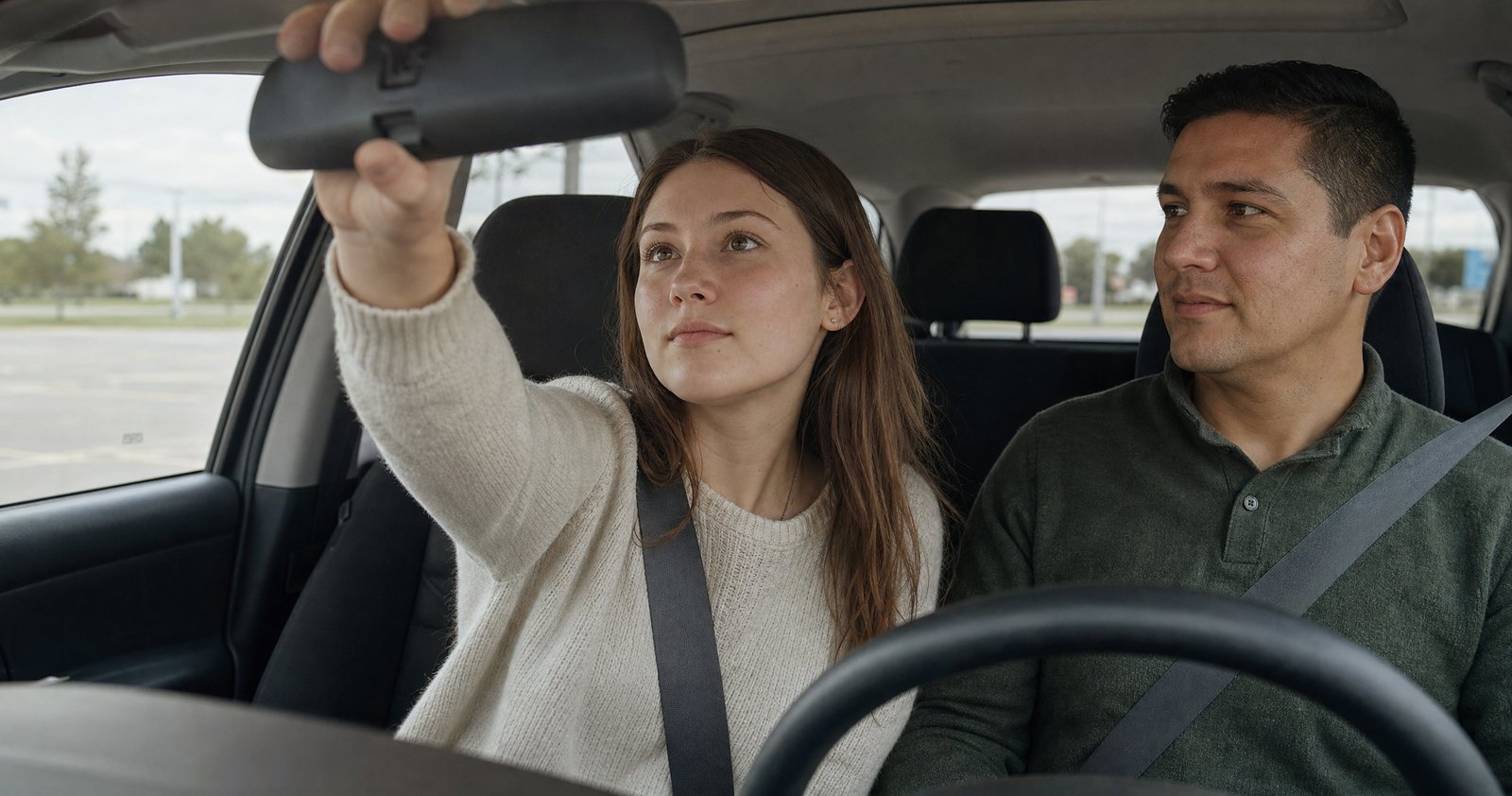
Before the engine starts. Seat position, so they can reach the pedals with a bend in the knee. Mirrors, all three. Steering wheel. Seat belt. Where the lights, wipers and hazard flashers are. Have them do it themselves while you watch, not set it up for them.
The pedals. In park, have them find the brake and the gas without looking down. Then put it in drive with the brake held, and let the car creep with no gas at all. Most new drivers are surprised by how much the car moves on its own.
Stopping. Creep forward, stop. Again. Again. Then a little faster, and stop smoothly. Stopping well is the first real skill, and it’s the one that makes everything else safer.
Steering. Slow, wide loops around the lot. Then gentle turns in both directions. Have them look where they want to go, not at the hood.
Reverse. Slowly, in a straight line, looking over the shoulder. Most first drives skip this. It shouldn’t wait.
If there’s time and energy left, a few practice pulls into a parking space. Badly. Many times. That’s how it’s supposed to go.
How long should the first drive be?
Twenty or thirty minutes is plenty. Concentration runs out faster than you’d think, and once it’s gone, the drive stops teaching anything. End while it’s still going well.
What to say, and what not to
Talk less than you think you should. The car is new enough. Give one instruction at a time, early, and in the same words each time: “ease off,” “brake smoothly,” “eyes up.”
Leave out the stories about everything that can go wrong. They don’t need to hear about crashes on day one. They need the car to feel controllable.
And watch your own hands and feet. The first time your foot stomps the floor on the passenger side, they’ll notice, and they’ll remember it longer than anything you said.
The first drive isn’t about learning to drive. It’s about finding out the car will do what you ask.
End it on purpose
Pick a moment when something just went well, a smooth stop or a clean loop, and end there. Park, turn it off, and ask one question: “What felt easiest? What felt hardest?”
Then tell them one specific thing they did well. They’ll be thinking about this drive for the rest of the day. Give them something good to think about.
What comes next
The first few weeks belong in empty lots and quiet streets, until stopping, steering and looking ahead stop taking all their attention. After that the permit year opens up into busier roads, then highways, nights and weather. There’s a full sequence in The Permit Year, Month by Month, and the reason the order matters is in The Six Environments.
For now, it’s just a parking lot. Start there. The rest of the year will be easier for it.
More on The Permit Year