
Following Distance: Teaching the Space Nobody Thinks About
Space is the cheapest safety feature in the car. New drivers give it away constantly, because nobody taught them how to measure it.
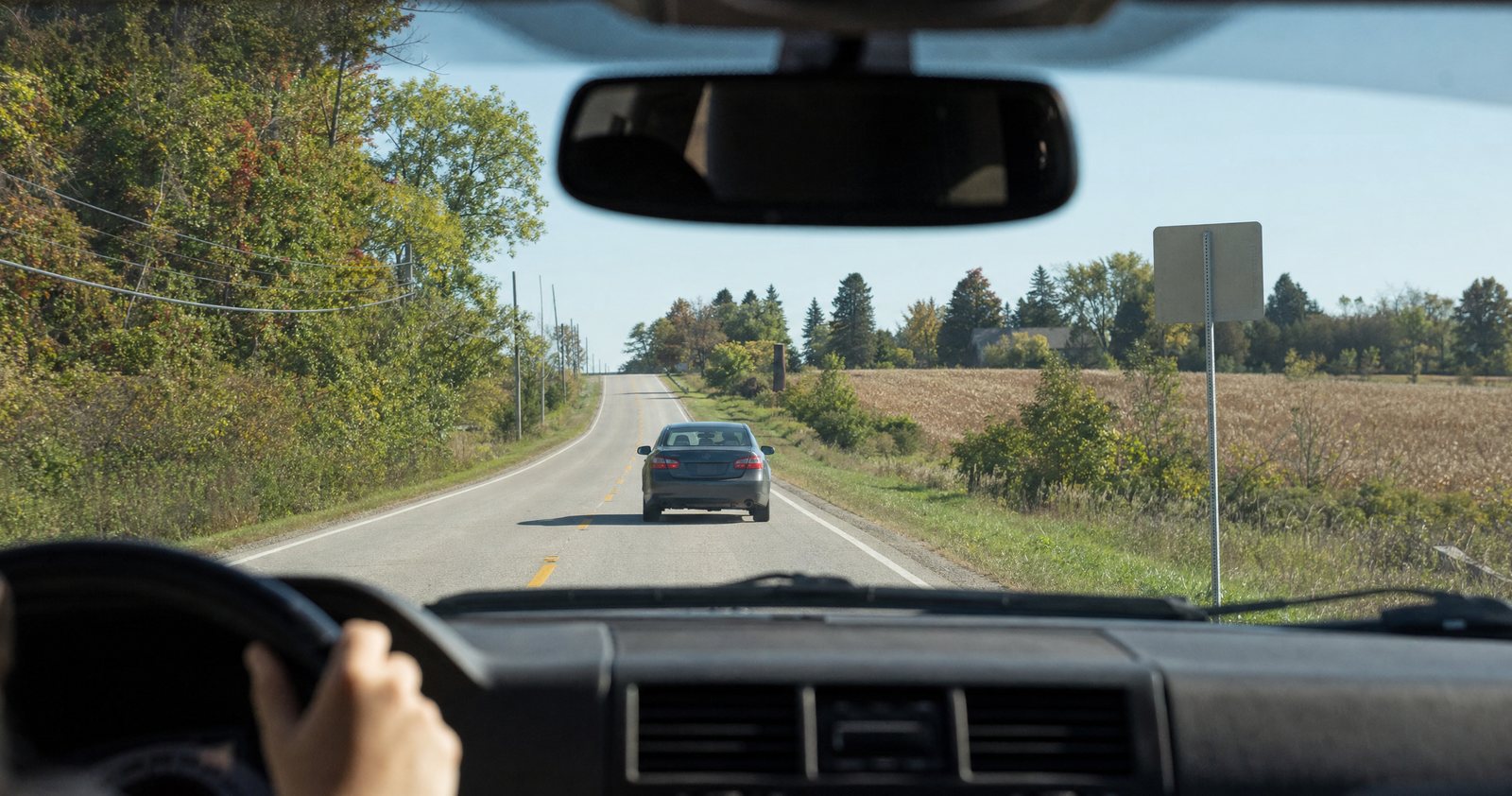
Watch an experienced driver and a new driver on the same road, and one of the clearest differences is space. The experienced driver leaves a gap ahead. The new driver drives right up on the car in front, close enough to read the bumper stickers.
They’re not being aggressive. They just don’t know what the right distance looks like, and at 40 miles an hour, a gap that feels plenty big usually isn’t.
Why does following distance matter so much?
Following distance is time to react. If the car ahead stops suddenly, the space between you is all the time your teen has to notice, decide, move their foot and stop.
Rear-end crashes are one of the most common kinds there are; NHTSA has put them at more than 29% of all crashes. And the errors behind most serious teen crashes, not scanning for hazards, going too fast for conditions and being distracted, are exactly the ones extra space protects against. A little more room turns a lot of mistakes into near-misses instead of crashes.
What is the three-second rule?
Keep at least three seconds of space between your car and the one ahead. When that car passes a fixed point, count; if you reach the point before you hit three, you’re too close.
Distance in feet is useless while driving. Nobody can judge 150 feet at 45 miles an hour. Time works much better.
Here’s how to count it. Pick a fixed object ahead: a sign, a pole, a shadow on the road. When the car in front passes it, start counting: “one thousand one, one thousand two, one thousand three.” If your teen’s car reaches the object before they finish, they’re too close.
California’s handbook recommends three seconds of space between you and the vehicle in front. New York says to increase it to at least three or four seconds in bad weather and when following large trucks. Some states teach a shorter base number; three seconds is a better habit for a beginner.
Feet are guesswork at 45 miles an hour. Seconds you can count.
When should a teen leave more space?
Three seconds is the minimum on a dry road in daylight. Add more when:
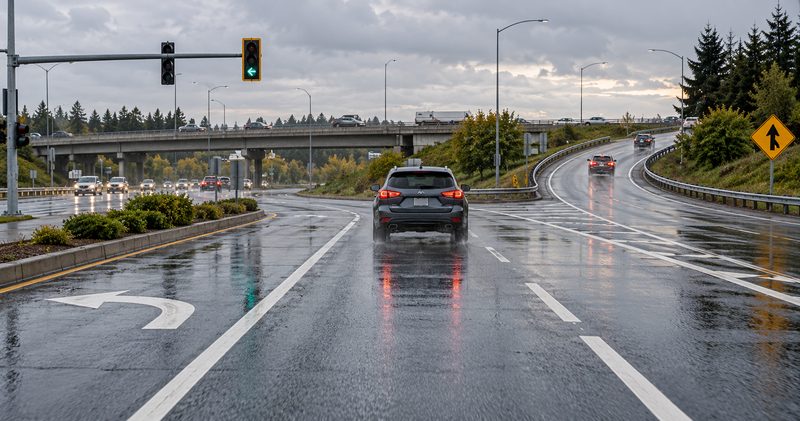
- The road is wet, icy or snowy. Stopping distances get much longer. California’s handbook says to allow more space on slippery roads.
- It’s dark. You see hazards later.
- You’re behind a truck or a big SUV. You can’t see past it.
- You’re behind a motorcycle. It can stop faster than a car.
- Someone is tailgating you. More on that next.
What should a teen do when someone is tailgating?
A tailgater is scary for a new driver, and the instinct is either to speed up to get away or to brake to make a point. Both are wrong.
Teach this instead: leave more space ahead. If the car behind can’t stop in time, the extra room in front lets your teen slow down gradually instead of suddenly. If it continues, change lanes when it’s safe, or pull over and let them pass. It’s not your teen’s job to teach anyone a lesson.
Practice it out loud
Following distance is one of the easiest skills to practice, because you can see it from the passenger seat.
- Count together. On the next drive, both of you count the seconds behind the car ahead, out loud, a few times. Make it a game.
- Then let them count alone. Ask “how many seconds?” at random moments. The goal is that they check without being asked.
- Do it in the rain. Ask them to double it, and notice how strange it feels at first.
- Watch for the creep. Space shrinks when traffic gets heavy or when they’re in a hurry. That’s exactly when it matters.
This week
Count the gap together on one drive, out loud, every time you pass a sign. It takes no extra time, and it’s one of the few safety habits you can hear being learned.
More on Practice

- California Driver Handbook: Navigating the Roads. California DMV, Checked October 2026 · dmv.ca.gov
- California Driver Handbook: Safe Driving. California DMV, Checked October 2026 · dmv.ca.gov
- Driver’s Manual, Chapter 8: Defensive Driving. New York DMV, Checked October 2026 · dmv.ny.gov
- Traffic Safety Facts DOT HS 811 331 (rear-end crashes account for more than 29% of all crashes, 2007 data). NHTSA, 2007 data · nhtsa.gov
- New study pinpoints what happens right before teens crash. Children’s Hospital of Philadelphia (via Newswise), April 2011 · newswise.com