
The First Car: What to Look For, What It Really Costs, and Where to Buy It
Teens are the riskiest drivers on the road, and they tend to end up in the least protective cars. You can fix most of that before you ever talk price.
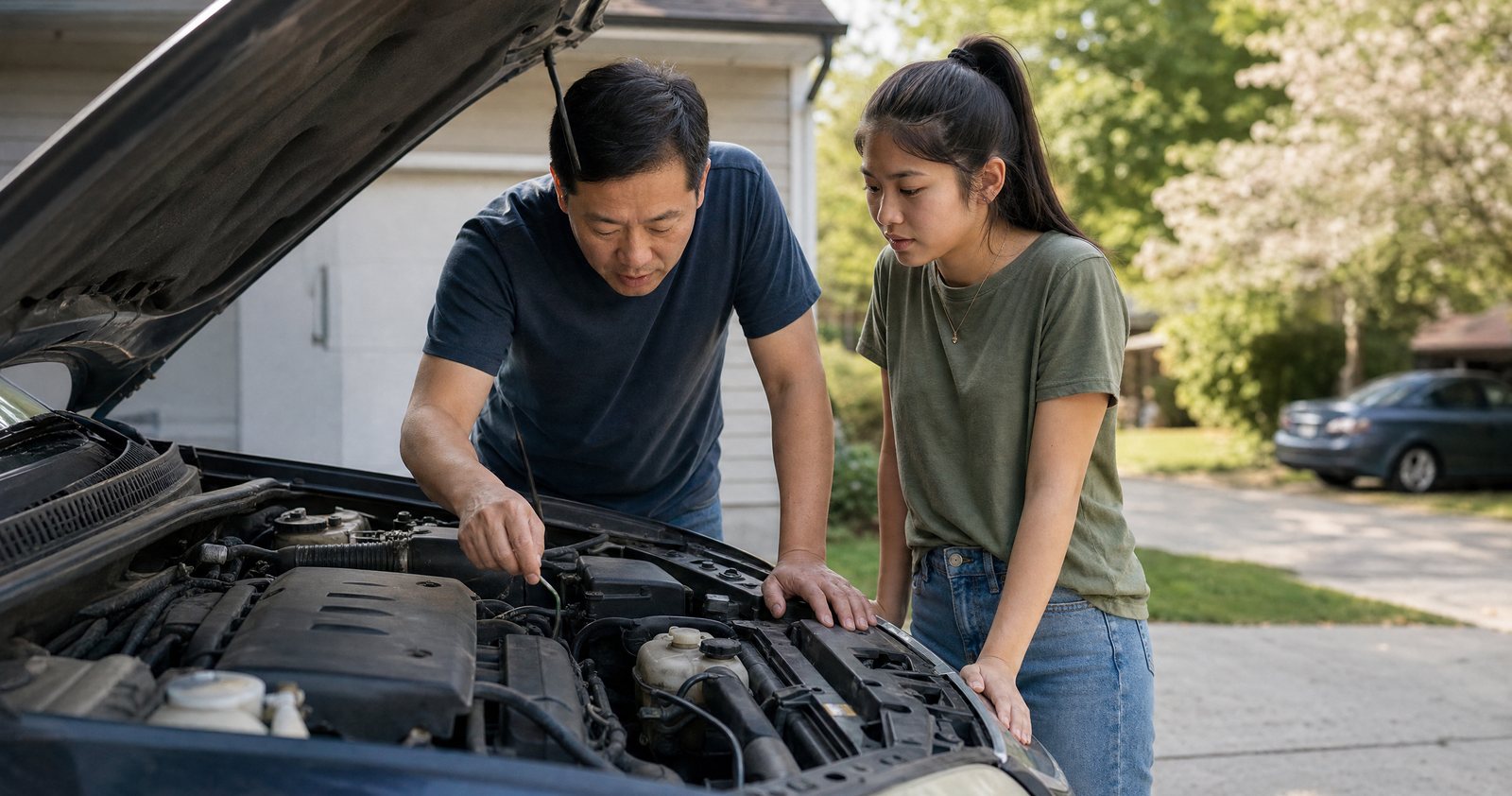
I bought my oldest son a Saab 9-3. I’ve told that story elsewhere, and the short version is that the car’s main qualification was not being a Corolla.
When the younger kids got there, we bought Honda Civics.
The Civic will never be the most interesting car in the high school parking lot. It is, however, on the Insurance Institute for Highway Safety’s list of safe used vehicles for teens. The Saab never would have made it. That gap is the whole article.
Here’s what I’d tell a friend who’s about to start shopping.
The pattern to avoid
The riskiest drivers on the road tend to land in the least protective cars. When IIHS looked at teen drivers killed in crashes, 28% were in a micro, mini or small car, compared with 19% of adults, and their cars skewed older too.
That isn’t mysterious. The cheapest car is usually small and old, and a first car is usually the cheapest car anyone can find. It’s just the one place in the family budget where saving money buys you the wrong thing.
The cheapest car is usually small and old. It’s the wrong place to save money.
Safety first, and it’s simpler than you think
IIHS keeps its advice for a teen’s car to four rules:
- Skip the horsepower. Power invites speed. If a model offers a bigger engine, take the base one.
- Not too small, not too big. Small cars protect worse in a crash. Big SUVs and pickups are harder to handle and take longer to stop.
- Electronic stability control. It’s been standard on new cars for years. On an older used car, check.
- The best crash ratings you can afford.
The list does the homework for you. Every used pick weighs more than 2,750 pounds and earned a good rating in a tough front crash test. It also now screens for something most parents never think about: whether the dashboard controls are easy to use. A car that makes your kid stab through three touchscreen menus to turn on the defroster is a distraction you paid for.
So start with the list, not the lot. Pick three or four models that fit your budget. Then go shopping for those cars specifically.
A quick shortlist
Here’s a starting point pulled from the 2026 IIHS list. It’s a sampling of the everyday sedans and small SUVs most families will actually find for sale, not the whole list. I left off the luxury models and the three-row SUVs (see seats, below).
Under $10,000 (IIHS “Good Choices”)
| Car | Model years | From about |
|---|---|---|
| Chevrolet Equinox (small SUV) | 2014–24 | $5,700 |
| Chevrolet Malibu (midsize) | 2014–25 | $5,800 |
| Hyundai Elantra (small) | 2017–25 | $6,100 |
| Hyundai Sonata (midsize) | 2016–25, built after Oct. 2015 | $6,900 |
| Mazda 3 (small) | 2014–18, built after Oct. 2013 | $6,900 |
| Subaru Impreza (small) | 2014–25 | $8,000 |
| Honda Civic (small) | 2014–25 | $8,100 |
| Honda Accord (midsize) | 2013–25 | $8,300 |
| Kia Sportage (small SUV) | 2017–25 | $8,600 |
| Subaru Crosstrek (small SUV) | 2016–25 | $9,000 |
Under $20,000 (IIHS “Best Choices,” which also require automatic emergency braking and decent headlights)
| Car | Model years | From about |
|---|---|---|
| Mazda CX-5 (small SUV) | 2018–25, built after Mar. 2018 | $13,100 |
| Mazda 3 (small) | Hatchback 2019–25, sedan 2020–25 | $13,200 |
| Subaru Forester (small SUV) | 2019–25 | $15,900 |
| Toyota Camry (midsize) | 2019–25 | $17,300 |
| Subaru Outback (midsize) | 2020–25, built after Oct. 2019 | $18,700 |
“From about” is the IIHS median price for the oldest qualifying model year, as of spring 2026. Newer years cost more, and the “built after” dates matter, so check the build date on the door sticker before you buy.
The real price isn’t on the window
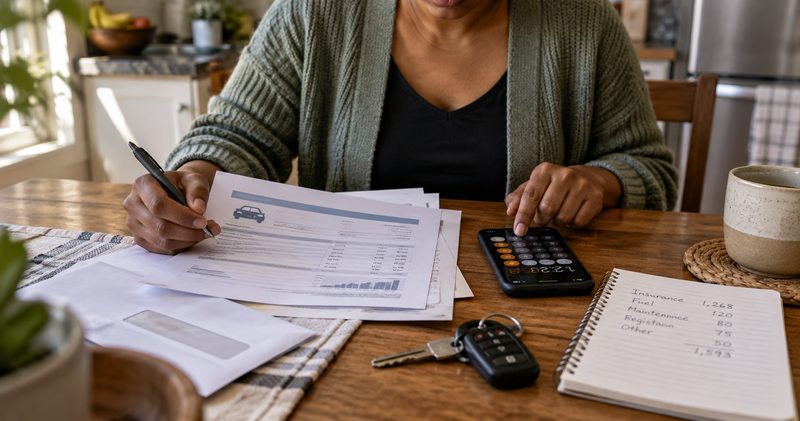
The sticker is the smallest number you’ll deal with. Here’s what actually shows up on the credit card statement:
- Insurance. Get a quote on the specific car before you buy it, ideally on the VIN. The same teen can cost very different amounts to insure in different cars, and adding a teen already costs more than most parents expect. Don’t find out which car is expensive after it’s in the driveway.
- Reliability. A car that breaks down puts a 16-year-old on a dark shoulder figuring out what to do next. Boring and dependable is a safety feature. That was most of the Civic decision.
- Tires and brakes. A safe car on bald tires isn’t a safe car. If they’re worn, budget for new ones on day one.
- The day you’re glad you spent the money. Something will get scraped or bent. If you’re carrying collision coverage, know your deductible now. Here’s what a crash actually costs, so you can decide with your eyes open.
The stuff nobody mentions
- Whose car is it? A car that’s “theirs” goes more places, with more people, at more hours, than a car they borrow from you. Some families keep the first few months on a family car and buy later. Not a rule. A reason to wait, if you’re on the fence.
- How many seats. Every extra seat is an invitation, and passengers are one of the biggest risks in the first year. A third row is a carpool waiting to happen.
- Headlights. Plenty of early solo driving happens after dark, especially in winter, and headlight quality varies a lot, even within the same model. The top tier of the IIHS list checks it. More on night driving here.
- Built-in teen settings. Some manufacturers let you program a teen key that caps top speed, mutes the radio until seat belts are buckled, or reports how the car was driven. GM calls it Teen Driver; Ford calls it MyKey. If the car you’re looking at has one, use it.
- The phone. A mount that keeps navigation off their lap, and driving focus set up on the phone before the first solo drive. Here’s why that matters.
Where to buy it
The traditional options are a dealership, where you spend a Saturday being told the price is a conversation, or a private sale, which is cheaper and puts all the homework on you.
I’ve used Carvana, and I’ll admit the first time felt strange. You buy a car without kicking a single tire. Then it shows up in your driveway at a price you didn’t have to fight for, and nobody walks to the back to “talk to my manager.” Once you’ve done it, the dealership feels like the strange one.
For this particular job it has a real advantage. Your shopping list is three or four specific models from a safety list. Your local lots may have none of them in your price range. A national inventory almost certainly does. Carvana sold more than 197,000 cars in a single quarter this year, so you’re shopping a very big lot.
A few guardrails, wherever you buy:
- Treat the return window as your test drive. Carvana gives you seven days to return the car for any reason. Use them. Drive it on your kid’s real routes, at night, on the highway.
- Get your own mechanic to look at it. Inside the return window, before you’re committed. A hundred-odd dollars well spent, from any seller.
- Check for recalls. Run the VIN through NHTSA’s recall lookup and get anything open fixed.
- Ask how long the title and registration will take in your state. That’s been the sore spot for online sellers. Connecticut’s attorney general settled with Carvana in 2025 over registrations that dragged on for months. Get the timeline before you pay.
This week
Look up the car your teen drives now, or the one you’re eyeing, on the IIHS list. If it isn’t there, find out why, and decide whether that’s a reason you can live with.
Then pick three models from the list that fit your budget, and get an insurance quote on all three before you shop. You’ll know your real price before anyone tries to sell you anything.
I wish I’d done that before the Saab.
More on Rules & Costs


- Teenagers. Insurance Institute for Highway Safety (IIHS), 2024 data · iihs.org
- Safe vehicles for teens (2026 list). IIHS, May 2026 · iihs.org
- Teens are the riskiest drivers, but they drive the least safe vehicles. IIHS, August 2020 (deaths 2013–2017) · iihs.org
- Carvana Announces Record Second Quarter 2026 Results (197,325 retail units). Carvana, July 2026 · investors.carvana.com
- Carvana Certified: 7-Day Money Back Guarantee and limited warranty. Carvana, Checked October 2026 · carvana.com
- Attorney General Tong announces settlement with Carvana following hundreds of consumer complaints. Connecticut Attorney General, January 2025 · portal.ct.gov
- Check for recalls (VIN lookup). NHTSA, Checked October 2026 · nhtsa.gov