
Phones and Distraction: The Rule Is Bigger Than “Don’t Text”
A new driver doesn't have attention to spare. The rule isn't about texting. It's about the phone getting none of it.
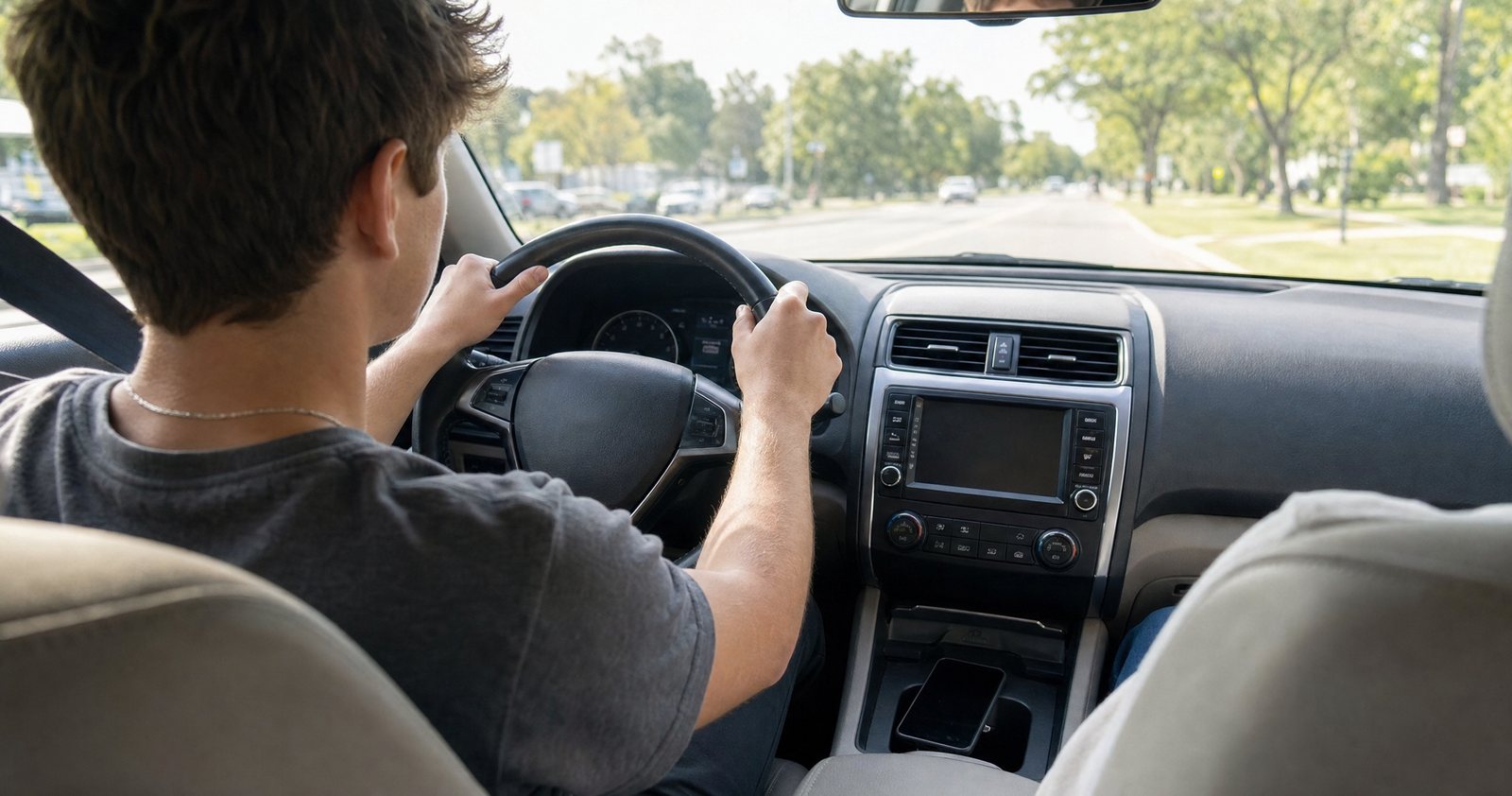
Every teenager already knows not to text and drive. They’ve heard it in health class, seen the posters, signed the pledge. Almost all of them will tell you it’s dangerous.
Then they’ll pick a song at a red light. Check a map at forty miles an hour. Answer one message, the short one, because it was only two words.
“Don’t text and drive” is a rule they agree with and don’t follow, because it’s too small. It names one thing. The problem is everything.
What the dashcams saw
The best evidence here comes from cameras. Researchers at the University of Iowa, working with the AAA Foundation, reviewed video from almost 1,700 crashes involving teen drivers. In 58% of them, the driver was inattentive or doing something other than driving in the moments before the crash.
Source: AAA Foundation for Traffic Safety and University of Iowa, naturalistic crash video study, 2015
The most common distractions were passengers (15%) and phones (12%). Then looking at something inside the car, looking at something outside it, singing, grooming, reaching for things. None of it dramatic. All of it ordinary.
And by their own account, 39% of high school drivers had texted or emailed while driving in the past month in the 2019 national survey the CDC cites. That’s what they’ll admit to.
A new driver isn’t distracted by much. They just don’t have much attention to lose.
Why is distraction more dangerous for new drivers?
Because new drivers have no attention to spare. The parts of driving that run on autopilot for you still take real thought for them.
For you, a lot of driving happens on autopilot. Lane position, speed, checking mirrors: you stopped thinking about those years ago, so there’s attention left over. It’s why you can drive and hold a conversation and only occasionally miss your exit.
A new driver doesn’t have that surplus yet. Every part of driving still takes real thought. So the glance that costs you very little costs them a lot, because there was nothing spare to spend.
What phone rule should new drivers follow?
Try this one instead: the phone doesn’t get attention while the car is moving.
Not texting. Not music. Not maps. Not “just checking.” If something needs the phone, the car stops first.
Then make it easy to follow:
- Turn on driving focus. iPhones and Android phones both have a mode that silences notifications while driving and can auto-reply. Set it to turn on automatically when the phone connects to the car.
- Set the route before you leave. Navigation gets set in the driveway, and the voice does the rest.
- Music is a passenger’s job, or a playlist picked before the car moves.
- Out of reach is better than out of mind. Bag on the back seat, or the console with the lid closed.
The part that’s about us
Our kids have been in the back seat watching us drive for about sixteen years. Every message we read at a stoplight was a lesson. What we do in the car will beat what we say at the kitchen table.
This one stings a little for most of us. So make it a family rule, not a teen rule. If the phone doesn’t get attention while your car is moving either, you’ll have a lot more credibility at the kitchen table. Your teenager will absolutely notice when you break it, and will absolutely mention it. Let them. That’s the rule working.
During the permit year
While they’re still on a permit, you manage this. Their phone goes away before the car moves, every time, so it’s a habit long before the license. Yours stays in your pocket unless you need it to coach or log the drive. And say the rule out loud, often, on ordinary drives. Habits come from repetition, not from the one big talk.
This week
Set up driving focus on your teen’s phone and on yours, together, in the driveway. Ten minutes. It’s the cheapest safety feature you’ll ever install.
More on Risk
- Using Naturalistic Driving Data to Assess the Prevalence of Environmental Factors and Driver Behaviors in Teen Driver Crashes (Carney et al., 2015). AAA Foundation for Traffic Safety, March 2015 (1,691 crashes, 2007–2013) · aaafoundation.org
- Risk Factors for Teen Drivers. Centers for Disease Control and Prevention (CDC), Reviewed August 2025 · cdc.gov
- Teen Driving. National Highway Traffic Safety Administration (NHTSA), Checked October 2026 · nhtsa.gov