
Staying Involved After the License, Without Hovering
Teens whose parents set clear rules and stay supportive crash about half as often. The trick is being involved in a way they'll actually accept.
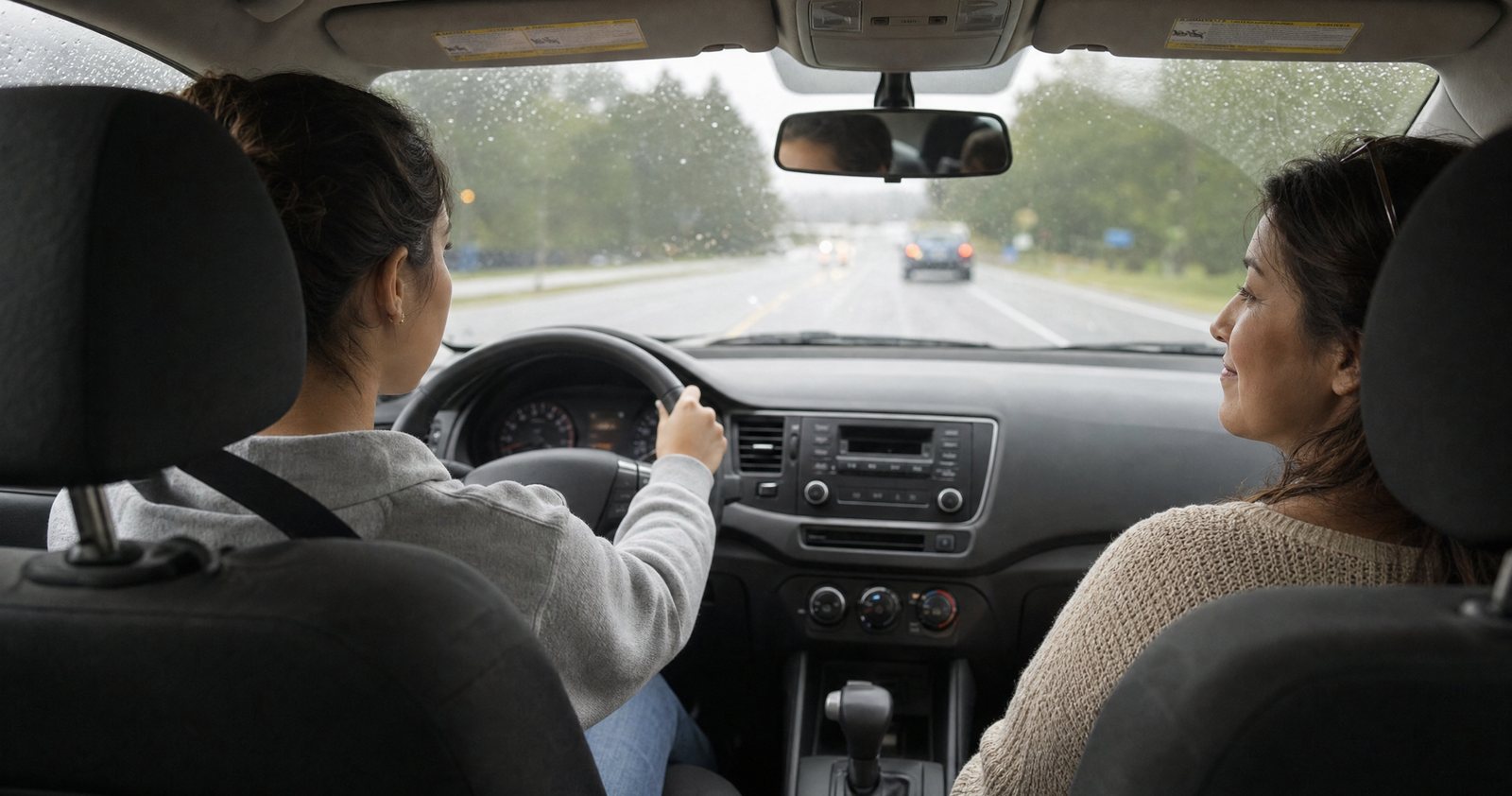
The license arrives, and the parent’s role seems to vanish overnight. For a year you were in every drive. Now you’re the person who finds out about the drive afterward, if at all.
It’s tempting to accept that. Your kid wants independence, you’re tired, and the state just said they’re a driver.
But the research says your role doesn’t end at the license. It changes.
Does parent involvement still matter after the license?
A study published in Pediatrics surveyed more than 5,600 high school students about their parents and their driving. Teens who described their parents as setting clear rules and monitoring their activities in a warm, supportive way, compared with teens whose parents were uninvolved, reported half the crash risk in the past year, were 71% less likely to drive intoxicated, wore seat belts about twice as often, and sped half as often.
Note what made the difference. Not strictness on its own, and not warmth on its own. The combination: clear rules, plus support.
That’s the target for the months after the license. Not a warden, not a bystander.
Clear rules plus real support. Either one alone doesn’t do it.
Keep riding along, sometimes
The logbook is done, but the hard stuff isn’t. For the first several months, ask to ride along on the drives that are new: the first heavy rain, the first snow, the first long highway trip, the first time driving to an unfamiliar city.
Frame it as a favor, not a test. “I’d like to come along the first time you drive to the lake. Humor me.” Most teens will, especially if you mostly keep quiet.
Check in without interrogating
“How was the drive?” gets “fine.” Try something specific and low-stakes instead: “Anything weird happen today?” “How was the traffic on Main?” “Did that light by the school ever get fixed?”
When they tell you about a close call, the most important thing you can do is not punish them for telling you. A teen who reports a near-miss is giving you exactly the information you need. A teen who gets grounded for it learns to stop reporting.
Should parents use a tracking app for a teen driver?
It can help in the early months if you decide on it together and are open about it. Secret tracking tends to backfire.
Location sharing and driving-monitoring apps can show where your teen is, how fast they drove, how hard they braked, and whether they used the phone. Some families find them useful in the early months. Others find they cause more fights than they prevent.
If you use one, three suggestions:
- Tell them, and agree on it. Secret monitoring that gets discovered destroys exactly the trust you need for them to call you when something goes wrong.
- Use it to start conversations, not to collect evidence. “I saw a hard stop on Route 9 yesterday. What happened?” goes much better than a list of violations.
- Set an end date. Like every other rule after the license, it should loosen as they show they’re ready.
Model it
They’re still watching you drive, and they’ll notice the gap between the rules you set and the way you drive faster than anything else. Phone down, belt on, speed limit, every time. It’s the cheapest kind of involvement there is.
Let go on schedule
Involvement doesn’t mean forever. The point of staying close in the early months is to be able to step back with confidence later. When the review date on your driving agreement comes, loosen what’s gone well. Say so out loud. A teenager who sees trust actually being extended has a reason to keep earning it.
This week
Pick one drive your teen hasn’t done yet, and ask to ride along the first time. Then, on the way home, ask one specific question and just listen to the answer.
More on Risk
- Associations between parenting styles and teen driving, safety-related behaviors and attitudes (Ginsburg et al., 2009). Pediatrics, October 2009 (5,665 students) · publications.aap.org