
Skids, Blowouts and Brake Failure: Teaching the Emergencies Before They Happen
Every instinct in a driving emergency is wrong. The only fix is to replace the instinct before the emergency, not during it.
Most of driving is learnable by repetition. You turn left a few hundred times and you get good at turning left.
Emergencies don’t work that way. Your teen might go a year without a skid, a blowout or a brake pedal that sinks to the floor. Then it happens once, at speed, with about a second and a half to respond. And in that second and a half, they won’t think. They’ll do whatever their body does by default.
The default is wrong. Stare at the thing you’re about to hit. Yank the wheel. Stand on the brake. Each one makes most emergencies worse.
So the job here isn’t to explain emergencies. It’s to put a better default in place before one happens.
The hard stop: brake hard and steer
Start here, because it’s the one emergency you can practice for real.
Almost every car on the road now has anti-lock brakes. With ABS, a hard stop means pressing the brake pedal firmly and keeping it there. The pedal will buzz and pulse under your foot. That’s the system working. New drivers often lift off when they feel it, because it feels like something broke.
And because ABS keeps the wheels from locking, you can still steer while you brake. Brake hard, keep the pressure on, look where you want to go and steer there.
How to practice it: an empty parking lot, 20 miles an hour, a cone or a landmark. On your word, brake as hard as they can and hold it. Do it until the buzzing pedal is boring. Then do it while steering gently around the cone.
Skids: eyes and hands go where you want to go
A skid happens when the tires lose grip, usually from braking, turning or speeding up too hard on a slippery road.
The handbook version, from California’s DMV: slowly come off the gas, don’t use the brakes, and steer in the direction of the skid. New York’s manual says the same thing in friendlier words: as traction returns, turn the wheel in the direction you want to go.
The part to drill into them is the eyes. Look at the open road, not the ditch or the pole. Hands follow eyes. Staring at the hazard steers you into it.
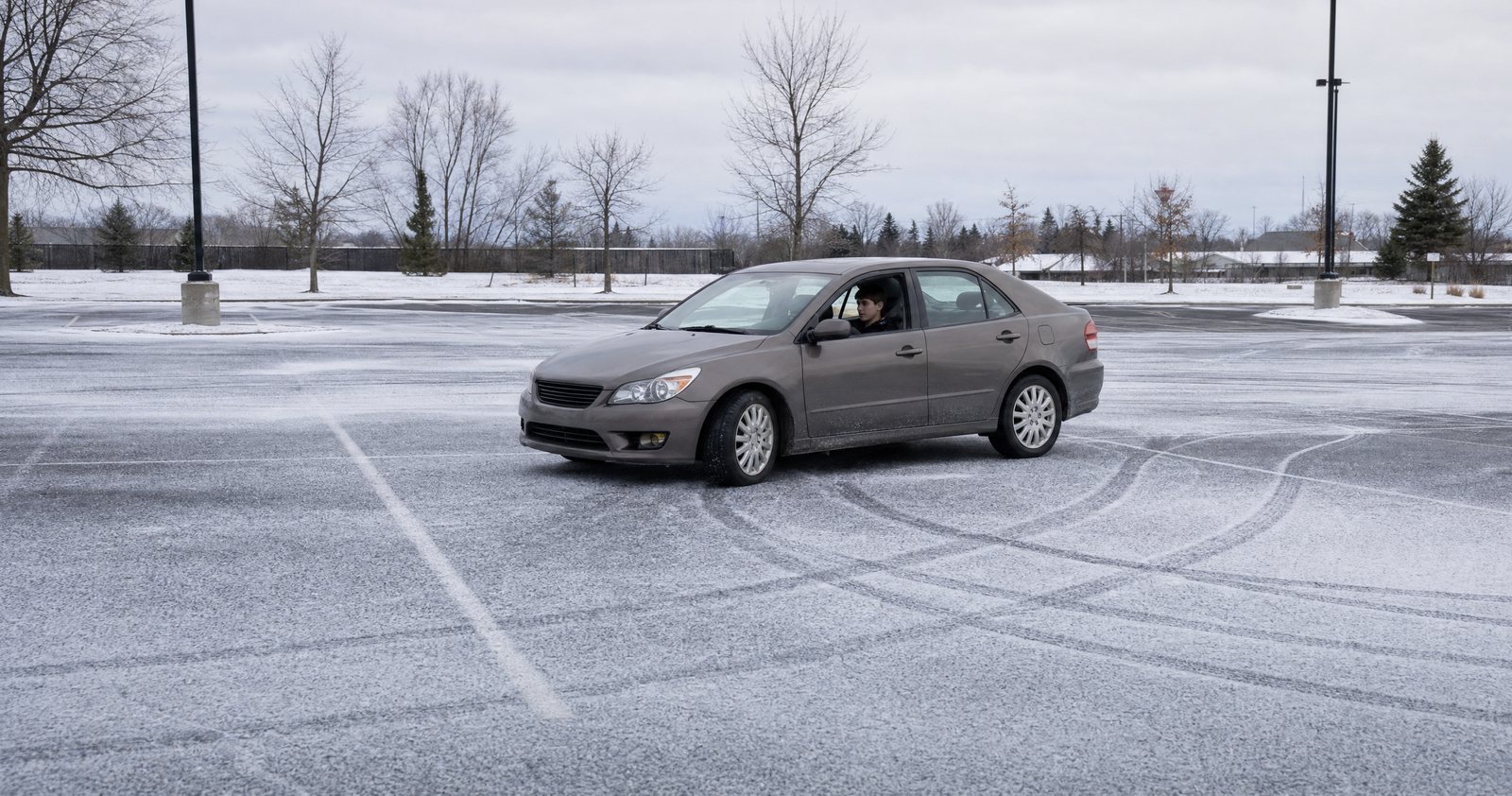
How to practice it: you can’t safely create a skid on a dry road, and you shouldn’t try. But the first snowy day is a gift. An empty lot, low speed, and let them feel the car slide a little and recover. I make the case for doing exactly that in Rain, Snow and Ice on Purpose.
A tire blowout: don’t slam anything
A blowout is loud, sudden and terrifying, and the car will pull hard to one side. The urge to stomp the brake is overwhelming.
Don’t. NHTSA’s guidance is to hold the wheel firmly with both hands, avoid slamming the brakes or jerking off the gas, and let the car slow gradually before pulling off the road when it’s safe. Keep it straight first. Slow down second. Get off the road third.
How to practice it: you can’t, and nobody should try. So rehearse it out loud. On a straight highway drive, say: “If a tire blew right now, what would you do?” Make them say the three steps. Do it again a month later. It sounds silly. It’s the closest thing to a rep you can safely get.
And the best blowout is the one that doesn’t happen. NHTSA recommends checking tire pressure at least once a month. Teach your teen to do it. It takes five minutes and it’s a good excuse to show them where the spare is.
Brake failure: pump, downshift, parking brake
Total brake failure is rare in a modern, maintained car. It’s still worth one conversation.
New York’s driver’s manual lays out the sequence: if the pedal goes to the floor, pump it to build pressure; if that doesn’t work, apply the parking brake gradually; shifting to a lower gear helps slow the car. Then steer toward the safest place to stop and use the horn and hazard lights.
How to practice it: in a parked car, show them where the parking brake is and how it works in your car. Many newer cars have an electronic switch, and plenty of teens have never touched it. Find out what yours does if you hold it while moving; the owner’s manual will tell you.
The emergency itself takes two seconds. The preparation for it takes months. You only get to do one of those calmly.
The rehearsal habit
Once a month or so, on an ordinary drive, ask one “what if” question:
- What if the car ahead stopped suddenly right now?
- What if a tire blew on this curve?
- What if we started sliding on this bridge?
- What if a deer stepped out right there?
Keep it calm and short. You’re not trying to scare them. You’re building a library of answers they’ve already said out loud, so that if the moment comes, there’s something there besides panic.
This week
Take the car to an empty lot and practice three hard ABS stops from 20 mph. Let them feel the pedal buzz. It’s ten minutes, and it’s the one emergency skill they’ll almost certainly need.
More on Practice
- California Driver Handbook: Safe Driving. California DMV, Checked October 2026 · dmv.ca.gov
- Driver’s Manual, Chapter 10: Special Driving Conditions. New York DMV, Checked October 2026 · dmv.ny.gov
- Tires (TireWise): blowouts and tire pressure. NHTSA, Checked October 2026 · nhtsa.gov
- Winter Driving Tips. NHTSA, Checked October 2026 · nhtsa.gov