
Should Your Teen Wait to Get Their License?
Sometimes “not yet” is the right answer. Waiting only helps if you spend the time driving, and waiting too long has a catch most parents don't know about.

In most houses, the license has a date on it before anyone has driven a mile. It’s the birthday. Everybody knows it. The kid has been counting down since middle school, and if we’re honest, so have we.
But the birthday is when the state lets them go. It isn’t when they’re ready. Ready Isn’t a Feeling is about how to tell the difference. This one is about what to do when the answer is “not yet.”
Sometimes not yet is the right call
Here are the honest reasons to hold off:
- The practice hasn’t covered the hard stuff. They’re smooth on the eight miles to school and have never driven at night in the rain or merged onto an interstate.
- You’re still making the calls. If you’re still saying “you’re clear” at intersections, they aren’t driving alone yet, even with you in the car.
- The judgment isn’t there. Not the skill. The judgment. Do they speed when they’re late? Do they argue about the passenger rule before they even have the license?
- Something else is going on. A hard semester, a rough stretch, a kid who’s exhausted all the time. Driving takes attention they might not have right now.
If you want a structure for spotting the gaps, the DRVN Readiness Framework breaks readiness into five parts.
DRVN Readiness Framework Control · Awareness · Judgment · Coverage · Independence. See how DRVN evaluates readiness
None of these is a character flaw. Every one of them is fixable. That’s exactly why they’re reasons to wait and not reasons to panic.
What waiting actually buys you
Here’s the part most people get wrong. Waiting by itself doesn’t do much. Driving does.
Researchers at Children’s Hospital of Philadelphia looked at New Jersey teens and their crash records by the age they got licensed. Teens licensed a little later had a smaller spike in crashes in their first months. But once drivers had about six months of experience, getting licensed later gave no further advantage. What lowered crash rates at every age was more driving.
So a teen who waits three months and drives with you twice a week comes out ahead. A teen who waits three months and doesn’t touch the car comes out three months older. That’s about it.
Waiting isn’t the plan. What you do while you wait is the plan.
If you decide on “not yet,” keep the permit active and keep driving together. Waiting is when you get to do the practice you skipped.
The catch with waiting too long
There’s a version of waiting that backfires, and most parents don’t know about it.
The rules that protect new drivers, like supervised hours, nighttime limits and passenger limits, are part of what states call graduated licensing. In most states, those rules are written for drivers under 18. Turn 18 and in many states you can skip straight to a license: no supervised hours, no curfew, no passenger limits.
That isn’t rare. A national AAA Foundation survey found that just over half of young people got licensed before 18, and at least 36% got licensed outside those graduated rules entirely.
So “we’ll wait until they’re 18” can quietly turn into “they learned with the least supervision and the fewest guardrails of anyone.” If you’re waiting, set an end date well before that birthday, and decide now that you’ll follow your state’s teen rules even if the law has stopped requiring them. Our 50-state table shows where your state draws the line.
How to say not yet
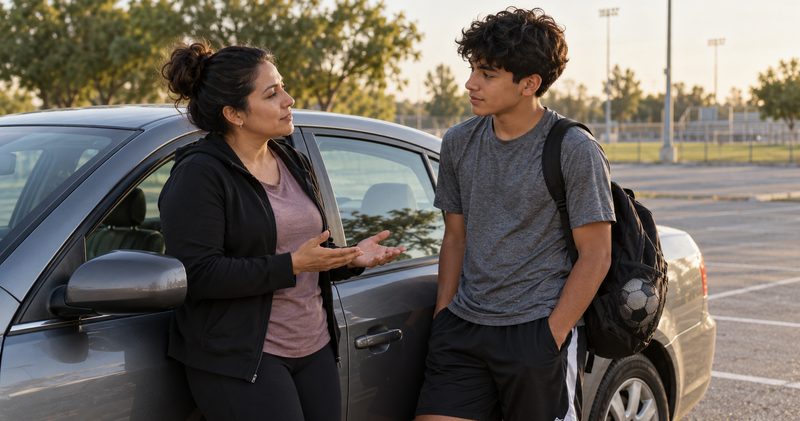
This is the hard part. Their friends are driving. They’ve been waiting for this for years. You’re about to be the reason they can’t go.
Make it about specific things. “You’re not ready” is a verdict. “I want to see five night drives and two highway trips where I don’t say a word” is a plan. Teenagers can argue with a verdict all day. It’s harder to argue with a list.
Let them help write the list. Ask them what they think they still need. You’ll be surprised how often they name the same things you would, and a plan they helped build is a plan they’ll work on.
Put a date on the review. Not a date for the license. A date when you’ll sit down and look at the list together. Waiting with no end date feels like a punishment, and it usually turns into one.
Keep it about driving. It’s tempting to tie the license to grades, chores or a curfew. Keep those separate. When the license becomes a reward for everything else, readiness stops being the question.
Own the inconvenience. Saying “not yet” means you’re still the transportation department for a while longer. That’s the real cost of this decision, and it lands on you, not them. It’s worth it. It’s also worth admitting out loud that it’s yours.
If you’re waiting because of money
Insurance for a new teen driver is a serious bill, and waiting a few months because of it is a legitimate reason. Just be honest that it’s the reason. What a teen driver actually costs walks through the numbers, and some of the ways to bring them down.
This week
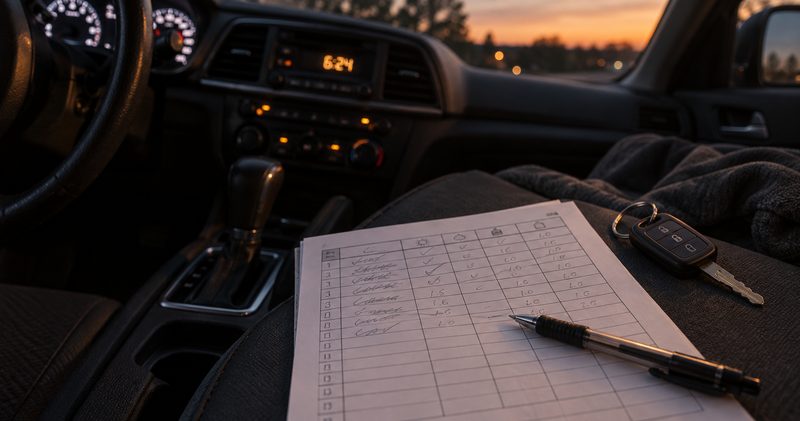
Write down three specific things that would make you say yes. Not feelings. Drives: a night trip, a highway merge, a rainy commute with no prompting from you.
Show the list to your teen. Ask what they’d add. Then put a date on the calendar to look at it again.
More on Readiness

- Curry, Pfeiffer, Durbin & Elliott Young driver crash rates by licensing age, driving experience, and license phase. Accident Analysis & Prevention / CHOP, July 2015 (New Jersey licensing and crash records). doi:10.1016/j.aap.2015.04.019 · trid.trb.org
- Tefft, Williams & Grabowski Timing of Driver’s License Acquisition and Reasons for Delay among Young People in the United States, 2012. AAA Foundation for Traffic Safety, August 2013 (survey of 1,039 people ages 18–20) · aaafoundation.org
- Graduated licensing laws (state-by-state table). IIHS, Checked October 2026 · iihs.org
The research behind this page, with caveats, is in the DRVN evidence library: Getting licensed later softens the early crash spike, but after about six months of driving experience, a later licensing age gives no further advantage · Only about half of young people get a driver’s license before 18, and at least 36% get licensed outside graduated licensing rules. Sources checked October 2026.