
Speed: Teaching the Number That Isn’t on the Sign
Speeding shows up in a third of fatal crashes involving teen drivers. The fix isn't a lecture about limits. It's teaching speed for conditions.
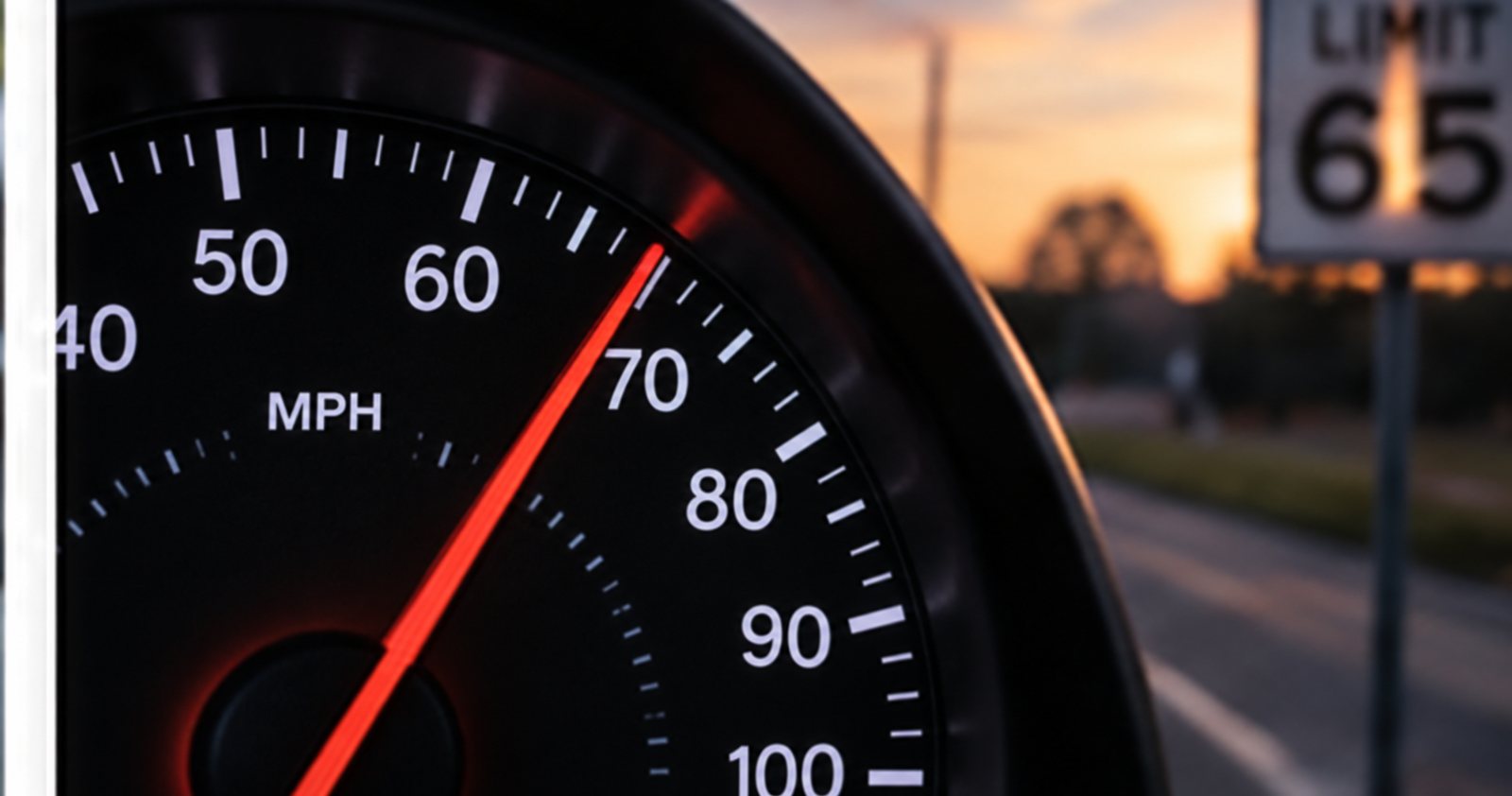
Most teenagers learn the speed limit as a target. The sign says 45, so 45 is correct, and 48 is close enough because everyone else is doing 52.
That’s the version of speed we teach without meaning to. It’s also the version that gets them in trouble, because the most dangerous speeding isn’t 15 over on an empty highway. It’s the legal speed on a wet curve at night, or the posted limit through a busy parking-lot entrance on a Friday afternoon.
How much does speed contribute to teen crashes?
In 2024, speeding was a factor for 33% of teen drivers (15 to 18) involved in fatal crashes, according to NHTSA. It’s not evenly split. The CDC’s numbers show young male drivers in fatal crashes were about twice as likely as young female drivers to have been speeding.
Source: NHTSA, Teen Driving · CDC, Risk Factors for Teen Drivers
None of that will surprise anyone who has ridden with a seventeen-year-old who just discovered the on-ramp.
The sign tells you the most you’re allowed. It doesn’t tell you what’s safe right now.
Why do new drivers misjudge speed?
Speed is hard to feel. A new driver judges it mostly from the speedometer, not from the road, so they don’t yet notice when 40 feels fast for a narrow street or slow for a highway.
And the physics are not intuitive. Braking distance grows much faster than speed does: roughly double the speed, roughly four times the distance to stop. That ten extra miles an hour feels like a small decision. At the moment it matters, it isn’t.
Most of all, new drivers don’t yet see far enough ahead to know what speed the next quarter mile calls for. Experienced drivers lift off the gas before a curve, before a crowded intersection, before the line of brake lights. New drivers react when they get there.
Practice choosing speed
Speed for conditions is a skill. You can practice it like any other.
Ask for a number before the sign does. On a road they know, ask “What speed would you pick here if there were no sign?” Then compare with the sign. Talk about the difference.
Change one condition. Same road, at night. Same road, in rain. Same road, with kids playing on the sidewalk. Ask for the number again.
Practice the slowdown, not just the stop. Coming into a curve or a busy intersection, have them ease off early and smoothly. If you’re grabbing the door handle, they started too late.
Drive the speed of the road, not the car ahead. “Everyone else was going 52” is not a reason. Being the slowest car in the right lane is fine.
The part we bring with us
This is another one where they learned from us. If we routinely drive five or eight over, they’ve absorbed that as the real rule, whatever we say.
So it’s worth driving the limit yourself during the permit year. They’ll notice. Teenagers are very good at spotting inconsistency in their parents, and this is a chance to have them spot consistency instead.
After the license
Speed tends to creep up once the license arrives and nobody’s in the passenger seat. Some families use a phone app or the car’s own settings to see speed after drives. Whether you do that is your call. What matters more is that the conversation continues: “How did the highway feel today? Where did you have to slow down?”
This week
On one practice drive, turn the speedometer conversation around. Before every new road, ask what speed they’d choose and why. Then let them drive it.
More on Risk
- Teen Driving. National Highway Traffic Safety Administration (NHTSA), Checked October 2026 · nhtsa.gov
- Risk Factors for Teen Drivers. Centers for Disease Control and Prevention (CDC), Reviewed August 2025 · cdc.gov