
The First Fender Bender: What Your Teen Should Do, and What You Should Say
Most teens will have a minor crash. The call you get afterward, and how you handle it, shapes whether they call you next time.
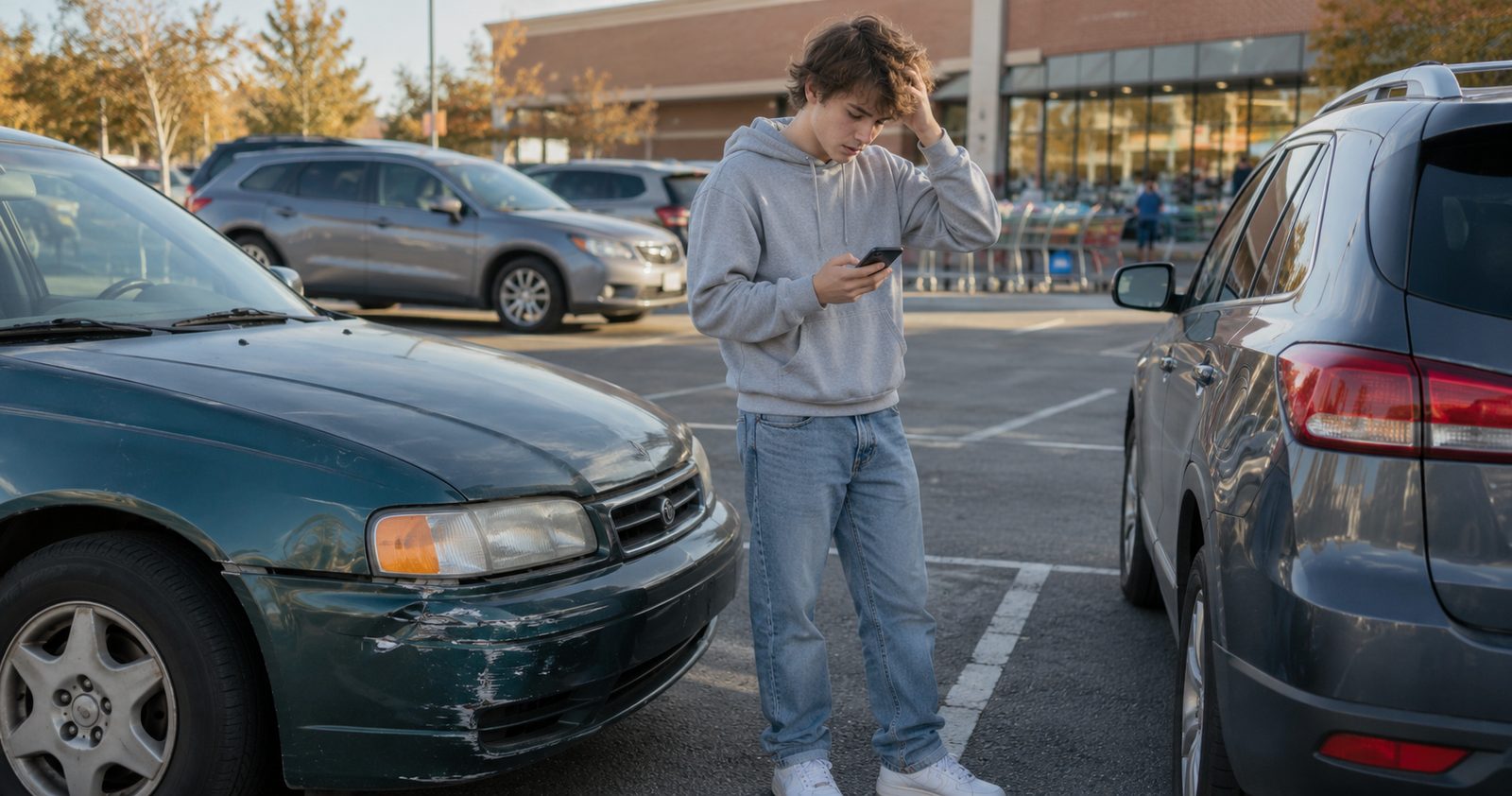
The phone rings. It’s your kid. The first words are “I’m okay, but…”
That sentence, and what you say next, is one of the most important moments in the entire process of teaching a teen to drive. Not because of the bumper. Because of what they learn about calling you.
Most new drivers will have some kind of minor crash: a parking-lot scrape, a bump at a stoplight, a mailbox that came out of nowhere. Plan for it the way you’d plan for a flat tire. Then it’s a bad afternoon instead of a crisis.
What should a teen do after a car accident?
Stop, check for injuries and call 911 if anyone is hurt, move to safety, call a parent, then exchange information and take photos. Don’t argue about fault.
Go through this with your teen before it happens. Better yet, put it on a card in the glovebox.
- Stop. Leaving the scene of a crash is illegal, even a small one. California’s handbook is blunt about it: you must stop.
- Check for injuries. If anyone is hurt, call 911. Don’t move anyone who’s injured.
- Get safe. If nobody’s hurt and the cars can move, get them out of traffic. Hazard lights on.
- Call you. Before the conversation with the other driver gets complicated.
- Exchange information. Names, phone numbers, driver’s license numbers, insurance companies and policy numbers, license plates. Show their license, registration and proof of insurance.
- Take pictures. Both cars, the damage, the plates, the scene. It costs nothing and saves arguments later.
- Don’t argue about fault. Be polite, share information, and leave the “whose fault” conversation for the insurance companies.
- Report it if your state requires. Rules vary. In California, for example, you must report a crash to the DMV within 10 days if there’s more than $1,000 in damage or anyone is hurt, regardless of fault. Check your state’s rule on your state guide or your licensing agency’s site.
The glovebox card
Make one together. On it:
- Your phone number, and a second adult’s.
- Your insurance company’s claims number and your policy number.
- The steps above, short.
- A pen. Phones die at the worst moments.
Then check that the registration and proof of insurance are actually in the car. A surprising number of families find out they aren’t on the day they need them.
What you say on the phone
This is the part that matters most.
Your first words should be some version of: “Are you okay? Is everyone okay?” Then: “Okay. I’m glad you called. Let’s handle it.”
Not “What did you do?” Not “Do you know what this is going to cost?” Not a sigh. Those conversations can happen later, calmly, if they need to. On the phone, your only job is to help your scared kid get through the next twenty minutes safely, and to make sure that the next time something goes wrong, they call you first.
The first crash teaches them what happens when they call you. Make it worth calling.
Afterward
A day or two later, when everyone’s calm, talk it through without blame. “What happened, from your side?” “What would you do differently?” Most minor crashes teach their own lesson; your job is to help them name it.
It’s also worth knowing the consequences can be real, beyond the insurance. In some states, a crash during the provisional license affects how fast restrictions lift. Iowa, for example, delays the move to the next license stage by 12 months for each conviction, crash or restriction violation. Find out what your state does, and tell your teen before it matters.
If it’s more than a fender bender
If anyone was hurt, if the police were called, or if the other driver is angry or the situation feels unsafe, your teen should stay in the car with the doors locked, call 911, and call you. Go to them if you can.
This week
Make the glovebox card. Five minutes, one index card, and a conversation your teen will remember the day they need it.
More on Rules & Costs
- California Driver Handbook: Financial Responsibility, Insurance Requirements and Collisions. California DMV, Checked October 2026 · dmv.ca.gov
- Intermediate license (under 18). Iowa DOT, Checked October 2026 · iowadot.gov